

Watch any sport of and it won’t take look for television announcers to proclaim with much enthusiasm that player “A” is great. Often times the slapping of the label is done with little thought. Noteworthy performances are of this earth – true greatness resides in the clouds.
The same applies to the assessment of golf courses. Golfers, at all levels, quickly slide the word into any 19th hole conversation even when the application is clearly head-scratching. Those looking to elevate an 18-hole layout often have too limited a base for comparison purposes and even less expertise in knowing how to apply a range of meaningful criteria in making such claims.
So much of the “great debate” centers around incessant hype. Vintage greatness does not appear regularly. Ignorant babbling heads that call themselves analysts on telecasts will quickly insert the word into the conversation.
Greatness does not appear on a steady or predictable time line. It’s the rarity of true greatness that makes its appearance so special.
Watch any pro golf telecast and the insertion of the word “great” is a common occurrence. Yet there are times when a moment arises and the verbal ratification is unnecessary. Witness the shot made by Tiger Woods when winning the 2012 Memorial.
The validation by Jack Nicklaus — tournament host and 18-time major winner — upon meeting Woods after the competition concluded was the ultimate compliment. This from a man who completely understands the rigors of such situations and stands in admiration when witnessing such vintage moments.
Gary McCord who provided the television commentary on CBS-Sports added the rightful postscript — “Does that remind you of anybody — one guy — that guy.”
Nicklaus himself was paid the ultimate salute when no less than the revered Bob Jones after witnessing Jack’s total domination during the 1965 Masters stated succinctly — “He plays a game with which I am unfamiliar.”
Lee Trevino stated his feelings clearly when saying the usage of the word “great” is misapplied via overzealous and uninformed television announcers. “Jack (Nicklaus) is great, Arnold (Palmer) is great.” The six-time major winner was quick to add he did not see himself in that discussion although in the Merry Mex’s case his reluctance says more about his desire to pay rightful respect to those who clearly were game changers in the sport.
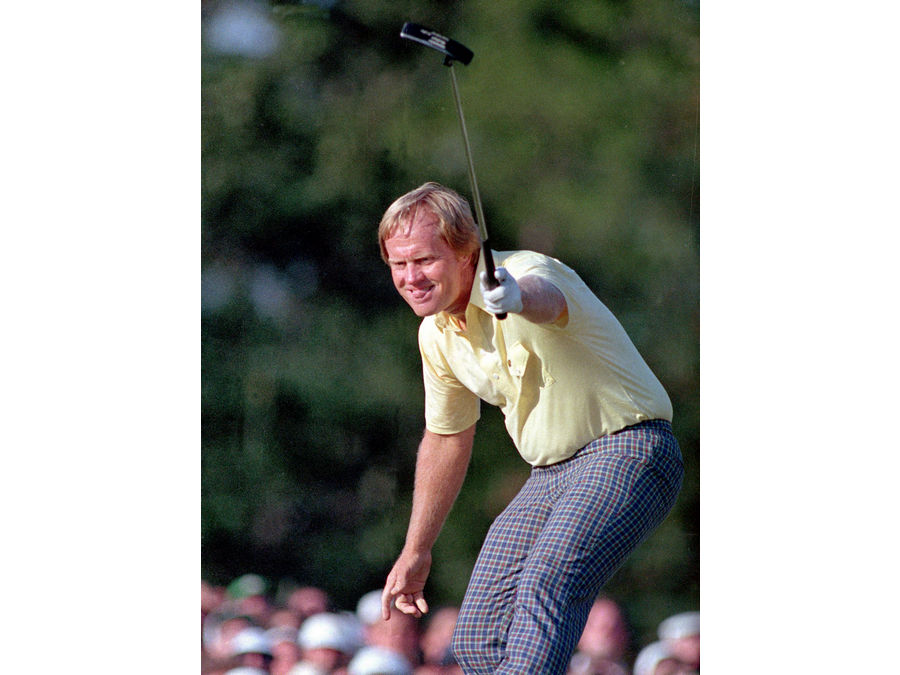
The four major championships are the premier events in men’s golf. They are the link to the distant past and a clear barometer in elevating one’s stature. Possession of any of the four titles is a clear milestone.
But winning a single major title does not automatically mean the automatic connection to the word “great.” Plenty of golfers have won a single major and then never been heard from again. Even those who have won two majors — see the likes of Andy North and John Daley — do not then propel themselves into the upper echelon of true greatness.
Greatness comes from being able to execute a high bar of production that is rarely seen. At last year’s Masters, Rory McIlroy elevated his name into the highest reaches when becoming just the 6th golfer to have achieved the career grand slam. Scottie Scheffler, the current world ranked top player, can do similarly if able to win the US Open this June at Shinnecock Hills. Even if Scheffler does not secure the missing major his continual presence at the top of the pecking order has demonstrated a high level of superlative play in which the attainment of greatness is bestowed.
Golf courses are also impacted by the same rush to “greatness” tagline. When Golf Digest first started ranking courses in 1966, the desire to include a swath of very good courses into the rare air of greatness began. Since then plenty of various publications have joined the debate — conveying “greatness” with a number of new courses.

Pine Valley, Cypress Point, The Old Course at St. Andrews are bonafide great courses. There are others but far too often “new” courses enter the debate and make inexplicable leaps up the ladder. Shadow Creek, the Las Vegas layout and brainchild of casino mogul Steve Wynn and architect Tom Fazio, jumped initially into the top ten among USA courses, according to Golf Digest.
Like shiny new toys children receive at Christmas, the aspect of “newness” can mean a quick desire to misapply the label of legitimate greatness.
But there are instances when a recent course can sustain its position. Sand Hills in Nebraska is the handiwork of the talented duo – Bill Coore and Ben Crenshaw. And the 1995 layout has established a serious toehold among the top ten best courses in America.
Clearly there are levels of stardom. One can be good and even very good but legitimate greatness is reserved only for the most impactful. Securing personal achievements through lofty statistics tells only one aspect of one’s greatness. Are emotions stirred? The truly great ones do that with fans.
Unfortunately, modern athletics confuse self-promotion with meaningful self-accomplishment. The former is not the same as the latter.
The temptation to be one’s own promoter can be hard to resist. Ken Venturi, the 1964 US Open champion and long-time analyst for CBS-Sports was fond of retelling a story during his early days in competitive golf. One time while hitting golf balls Venturi was impressed by his prowess and turned to his father and said — “Not bad – huh?”

Venturi’s father simply stared into the eyes of his son and stated a very simple but direct response. “Ken, when you’re good — you need not tell them — they’ll tell you.”
Hype is a constant element in today’s world. The bombardment of “look at me” vanity is an ongoing episode via never ending self-promotion. The hubris of some who follow this path is the delusionary belief that if one says something long enough and loud enough it therefore becomes true.
The fog that’s created can be hard to see through.
So how does one identify real greatness from the fakes and wannabees?
Likely the best one can do is apply the following formula – when there is a doubt – there is no doubt.
Truly great ones do not engender doubt.
The clarity of their careers is front and center.
Lasting legacy lives on.
Case closed.

Related: Omar Jermaine interview

M. James Ward
A long-time member of both the GWAA and MGWA. The 68-year-old has covered all facets in golf since 1980 — including reporting on over 100 major championships and 13 Ryder Cup matches. His writings have appeared in various outlets. On a personal level, has played over 2,000 courses globally and is lead reviewer for Top 100 Golf Courses.
Previously served for 17 years as national course rating panelist for Golf Digest. Has also personally competed in USGA Championships. Resides in the metro New York City area with his wife Celeste. Favorite quote paraphrased for golf — “You are what your golf score says you are.”