

Part 1
Clifford Roberts, the famed major domo at Augusta for many years, was renowned in saying the club does not make changes — it makes improvements. What specific improvement would you make if hired by the club?
Chet Williams: Restore the bunkers to their original MacKenzie character. In my opinion they have become very machined, or harsh in appearance, and this is in opposition to a golf course that is widely known for its natural features.
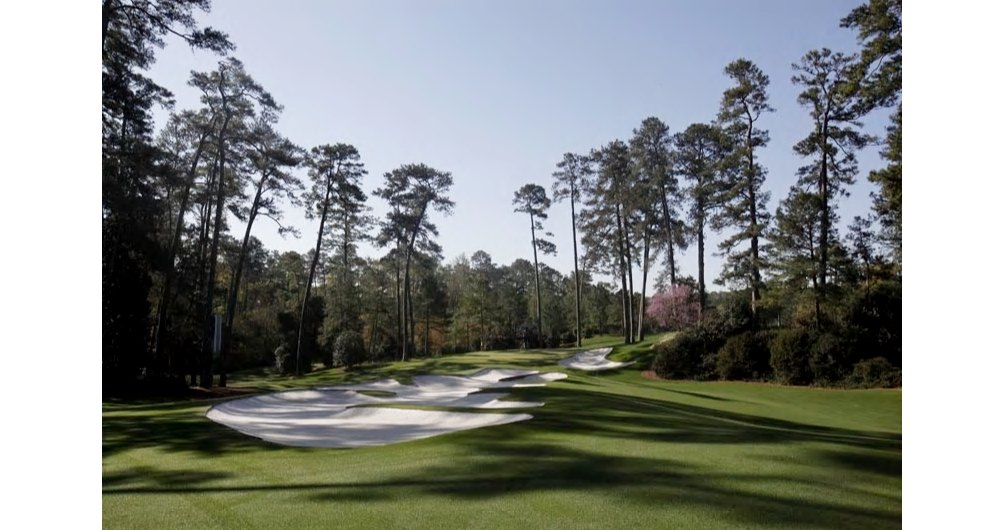
The only bunker on the course retaining some of the MacKenzie character is the fairway bunker on hole 10, and it currently stands out in a bad way because it is the only one on the golf course.
Brandon Johnson: I may be an outlier here, but I believe the club has been successful at keeping a historic piece of architecture current with today’s elite game.
They have clearly taken a stance at wanting to provide a proper championship test for the best players in the world and deployed the necessary resources to achieve that. But — adding additional thought-provoking pin locations and allowing the landscape to “naturalize” would top my list.
Dale Beddo: If you look back over the last 30, even 40 years. You’ll see that every winner plays the golf course exactly like somebody else did. You can go through and execute 90% of the shots that the guy hit the year before you’ll find yourself in contention, if not, winning the tournament outright.
Augusta National has come pretty close to perfection. If I could make one change to the golf course, it would be to introduce multiple ways to play the golf holes.
Patrick Burton: A “faithful” restorative effort for the bunkering of the club and lost aspects of the green complexes.
Colton Craig: Hole 2 creek restoration. Reintroducing the ‘lost’ MacKenzie creek in place of the current piped waterway.
This restoration enhances the hole’s aesthetic appeal and introduces critical strategic tension early in the round, forcing players to weigh the risk of going for the green in two that does not exist today.
Name one hole at Augusta National that is underrated and one overrated. Why in each case?
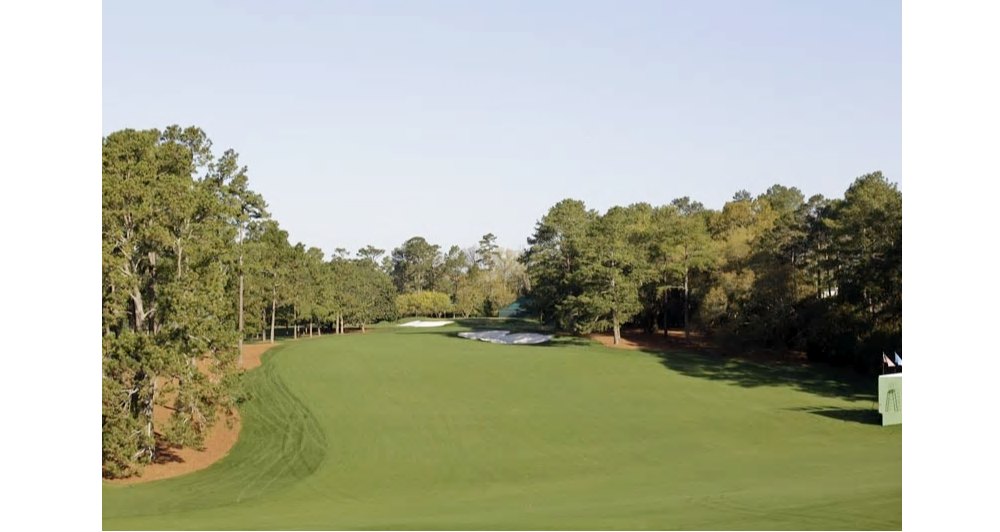
Colton Craig: The first hole is underrated. Its strategic bunkering and brilliant green offer an architectural depth often lost in the shadow of the back nine.
Conversely, the eighth is perhaps overrated. While the hole is solid, the artificial mounding around the green lacks a consistent aesthetic thread, leaving it feeling like a stylistic anomaly compared to the rest of the course.
Dale Beddo: I think there are a number of great golf holes at Augusta. Trying to selecte one as overrated is especially hard to do when you have a golf course that across-the-board has achieved such greatness and excellence.
Brandon Johnson: Is there a hole at Augusta that is overrated? That suggests one or more holes receive more praise than it deserves. Augusta’s “great” holes deliver confounding strategic decisions, picturesque aesthetics and nail-biting drama every year.
For me, each hole at Augusta National builds to tell a compelling architectural story. Sure, we can isolate one hole, debate its features, strategic value and determine one hole asks a simpler strategic question than another, but the sum is greater than its individual parts.
Can I rephrase this to an underappreciated hole? Hole 6 with its sliver of a back right pin location, the bold contours of the 14th green are hard to fathom on a TV screen and deserve a mention.
I’ve been intrigued with how different the 3rd plays now vs what I saw years ago. It can be a tricky little hole. The ability to bomb drivers at the green brings elevation change, contour and needing a delicate touch under pressure into play.
Patrick Burton: Underrated: Hole 8 with the bowl / kick-plate surrounding the green is awesome to watch — one of the few areas of the course where the pros utilize the ground contours as intended.
Overrated: Hole 4. Not to be critical, but if the wind is up during the tournament this one gets a little tough to watch given the length and downhill nature of the tee shot.
Chet Williams: I feel the first hole is underrated. Probably because it is just that — hole 1. The hole is very strategic in that the closer you play to the fairway bunker the better your angle of approach into this wonderful green.
We see every year players having all kinds of trouble with the approach because they hit their drives too far to the left. The contours of the green are very interesting, and can stand with the other celebrated greens on the course. Not a gentle handshake starting the round.
For overrated — I’ll go with hole 15. Architecturally I do not find the tee shot all that inspiring, even though it is strategic, and the pond in front of the green is not especially natural looking. Nor am I a fan of its forced carry aspect. Having said all that — it is definitely one of the more dramatic holes every year during the Masters.
Augusta National has always been a venue where power is accentuated. What role do architects have in providing some check in preventing power from simply overwhelming a course?
Colton Craig: As athletes get stronger, architecture must adapt. Shrinking green sizes prevents the brute from dominating the tactical player.
Many modern designs have large 10,000-square-foot greens that minimize the short game. At SCC Design, we believe in the ‘scrambling’ identity of golf.
Patrick Burton: Proper bunker placement, width of fairways and rewarding angles of attack from longer distances.
Chet Williams: Architects need to create situations where length combined with accuracy, but not length alone, can give a player an advantage. The par 5s at ANGC are good examples of this. If the tee shot on hole 2 is hit long and accurately, additional distance can be gained from the downhill slope, and the green can be hit much more easily in two.
A long inaccurate tee shot will end up in a deep fairway bunker, or an unforgiving low area left of the fairway. In a similar manner, a long accurate tee shot on hole 15 makes reaching the green much easier. A tee shot hit long and left, but still in the fairway, requires a risky hooked shot over water to reach the same green in two.
Dale Beddo: There are a variety of tools available to an architect from bunkering trees, water side to side slopes two identify a few. Simple answer — the architect has the ability to place hazards that controlled distance as well as direction. Those hazards can also be utilized to direct the player where to hit to that can keep him in check.
Brandon Johnson: Architects should take the lead on going beyond the obvious and prevailing arguments of the day swirling around the “distance debate” and strive for more creative overlooked solutions that moderate the use or effectiveness of power and distance alone.
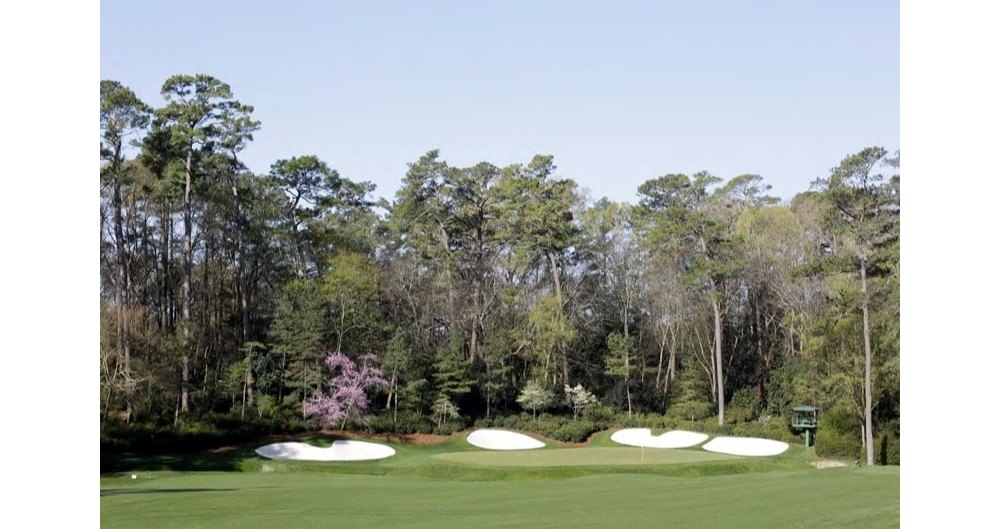
The primary defense at Augusta National is the greens. When Jones and MacKenzie created the various contours, the average green speed was likely half of what it is today. Can green speeds get too fast so that overall skill is less apparent and more about luck happening?
Chet Williams: I suppose the answer to this question is yes, but there is not a very defined line of what this green speed is. It depends primarily on the contour of the greens and the matching of speed with them. There are greens that play very severely at a 10-12 Stimpmeter reading, and others that don’t get severe until they reach a 12-14 reading.
There are probably even some greens that won’t seem severe at a reading of 15, but there are likely very few of those. I believe that the point where greens become too fast, and start tipping the scale from skill to luck, is when players have to play mostly defensively. That speed, however, is very different for elite professionals and average golfers.
Brandon Johnson: In general yes, green speeds on greens with contour, and not enough pinnable locations, can become extremely dicey at higher speeds, especially under a poor set up.
Augusta National does a fantastic job setting up their golf course. Each pin location option has been meticulously studied and tweaked over time so, if necessary, they can take it right to the edge without fear of going over. They understand to challenge the best players in the world it needs to be edgy and fast.
Colton Craig: Great putting requires a perfect marriage of speed and break.
When greens become excessively fast, that relationship breaks down, tasking the player only with reading the line.
Slightly slower greens would also reveal more difficult and exciting pin locations.
Patrick Burton: I think skill is still a major part of it. Sure, the landing areas are tight on some greens but the professional golfer of today can certainly handle it.
Dale Beddo: In the course of the last 10 years, we have seen circumstances such as assaulting the golf ball from Dustin Johnson at Oakmont, as a result of high winds and fast greens. The chip in that Davis Love and Tiger Woods both made at hole 16 at Augusta probably could not have happened with speedy greens.
I’m not sure luck plays a direct role, for example when Tiger made birdie on the back of 17 at TPC Sawgrass it was a demonstration of skill and probably the only putt made in the history of The Players Championship from that position.
I would tend to believe that speedy greens require more skill than luck. However, we have also seen primary instances in the USGA events, most notably at the Open, where overly fast greens have proven to be more penal than rewarding.
Interesting how hole 14 at Augusta National doesn’t have a single bunker. Do bunkers still have relevance given the skill level of elite players and how much of a role do you give them with your designs?
Chet Williams: In the traditional sense of what a bunker is, they are not as relevant as what they used to be for elite players. For most amateur players, they are still very relevant, and that is who most of us are primarily designing for.
An architect can design bunkers that increase their relevance for elite players by making them smaller — think pot bunkers — making them deeper, flatter bottomed, steeply faced, and by intermingling them with natural / native areas, which produces more unpredictability and randomness.
We can also use contour to direct balls hit by long hitters toward bunkers when they are not as accurate. I would say that bunkers on my courses have less of a role than they used to but that can vary from site to site. A flatter site may have more bunkers to create interest, while a site with more topography might have less bunkers. A smaller role by bunkers lets the architect create a greater variety of ways to challenge players, and variety in design is a good thing in my opinion.
In the last 20-25 years bunker construction has gotten really expensive, so this also impacts the role of bunkers.
Dale Beddo: I am a big fan of a green’s undulations that exclude the necessity of bunkers on occasion. However, I think it is important to realize that skill level that is referred to in this question.
It is imperative that we remember that golf courses are far more often designed for average to higher handicapped golfers. When we realize that our golf courses are played by amateurs as opposed to professionals we find that bunkering is not only prudent it is mandatory in creating shot value to the game of golf.
Patrick Burton: Yes, they certainly play a role with elite players, especially at ANGC – be-it fairway bunkers and greenside, those players still want to avoid them.
For my designs, I tend to reduce the height/depth of fairway bunkers to improve playability and I typically place more bunkers on shorter par 3s, 4s and 5s and fewer on longer holes.
Brandon Johnson: Yes. Strategic placement, size, shape, depth, coupled with pin location and surrounding contours all factor in keeping bunkers relevant and effective features. With a green as interesting and undulating as the one on hole 14 it doesn’t need bunkers.
While I still view bunkers as important features to include in my design work, I feel bunkers are more effective when used efficiently and in combination with other features like contour, elevation change, trees and tree lines, natural rock outcroppings, or the sparing use of water hazards.
Colton Craig: Bunkers remain vital to the golf landscape, but ultra-consistent sand has inadvertently reduced their sting.
A “dirty secret” of elite play is that a fat bunker shot often releases while a thin one spins and holds, creating a margin of error that grass lacks.
For pros, the only true penalty is inconsistency. At SCC Design, we are increasingly utilizing grassy hollows and hummocks in our parkland projects to restore that lost variance.
In your estimation – the top five MacKenzie courses in order are what?
Dale Beddo: My top 5 MacKenzie Golf courses are in order –Cypress Point, Royal Melbourne, Pasatiempo, Meadow Club and New South Wales.
Colton Craig: I’d go with the following in order: Cypress Point, Augusta National, Crystal Downs, Meadow Club and Royal Melbourne – although I have only seen photos of the Aussie layout.
Brandon Johnson: In order — Cypress Point, Royal Melbourne, Augusta National, Crystal Downs and Pasatiempo Golf Club.
Patrick Burton: 1. Cypress Point; 2. Royal Melbourne; 3. Augusta National; 4. Lahinch; 5. Crystal Downs.
Chet Williams: In order — Cypress Point Club, Royal Melbourne (West), Crystal Downs, Valley Club of Montecito and Pasatiempo.
If Augusta National were not the annual host for the Masters would the acclaim for the course be just as high?
Chet Williams: I think the acclaim for the course would still be high, being a MacKenzie course, but not nearly as high as it currently is.
Golf course architects and architecture lovers would still admire MacKenzie’s work, but most fans know it for the immaculate conditioning that they see on TV, and by the great quantity of historical moments the course and tournament have provided.
Without the tournament we would have none of this, and far fewer of us would have ever seen the course at all.
Patrick Burton: I doubt it. The attention the course receives by hosting the tournament is unmatched — No doubt, the course would still be among the best in the country, but I’d imagine it would be a select few that would ever have access to see it.
Brandon Johnson: It would be difficult, perhaps if tournament conditions were achieved year around? Surely a cult following would emerge from those who experienced it. It is a treat to see Augusta National in absolute prime conditions every year with the best players in the world trying to solve its strategic riddles.
Time has allowed players and patrons to develop an intimate familiarity with the course’s history, architectural features and how it is supposed to be played. That is nearly impossible to replicate.
Dale Beddo: Probably not, due to the historical value over the years.
Colton Craig: Its fame might dim, but its prestige would hold steady. It would still command the same architectural reverence as Pine Valley, Seminole, or Cypress Point.

Related: Steve Loerzel interview
***
The Participants
Brandon Johnson
Owner and Principal Architect
Brandon Johnson Golf Course Design

With over 25 years of experience designing golf courses around the world, 12 of those years dedicated to leading the Arnold Palmer Design Company, Brandon is a designer with a multi-dimensional background who brings a wealth of skills, creativity and a design agility that suits any project scenario.
Informed by his well-studied personal and professional journey that gives him a fresh perspective on the game and golf design. Brandon’s thoughtful and engaging design process is rooted in his core belief that golf courses are ultimately created in the field.

Dale Beddo
Beddo/Boyden Golf Design

Comprises nearly 75 years of design, construction, and renovation, including master planning and coordinated efforts with local governing entities.
Beddo/Boyden golf courses sustain both public/private LPGA and Epson Tour events with future planned projects that will include PGA Champions tour event.

Chet Williams
Chet Williams Design

In the golf course design business for 40 years, including 25 years working with Jack Nicklaus in his golf course design business.
In 2013 I started his own company — Chet Williams Design. Has had the good fortune to work in many places around the world, including the U.S., Canada, Mexico, Colombia, Panama, Japan, South Korea, and Thailand.

Patrick Burton
Owner, Burton Golf Design & Senior Designer for Fry/Straka Global Golf Design

A native of Columbus, Ohio and graduate of The Ohio State University with degrees in both Landscape Architecture & Turfgrass Science. Patrick spent the first half of his career serving as a Senior Designer at Forrest Richardson Golf Design, then on to Schmidt-Curley Design, working for the better part of 10 years on the Design and Construction of more than 30 projects throughout Asia.
In 2015, he established Burton Golf Design, along with becoming a Senior Designer for Fry/Straka Global Golf Design. To date, Parick remains active with the Design and Construction of Course throughout the world.

Colton Craig
Golf Course Architect
Smyers Craig & Coyne

Colton, an Oklahoma State graduated with honors in Landscape Architecture and received the largest undergraduate scholarship at Oklahoma State to study the economic impact of renovating a golf club.
His journey includes winning the prestigious World 100 Club Architectural Fellowship, which allowed him to study over fifty legendary links courses in Scotland. In 2019, at the age of 25, Colton started his own design firm. His firm merged with an industry leader, forming Smyers Craig and Coyne, and they design golf courses across the country and globe.


M. James Ward
A long-time member of both the GWAA and MGWA. The 68-year-old has covered all facets in golf since 1980 — including reporting on over 100 major championships and 13 Ryder Cup matches. His writings have appeared in various outlets. On a personal level, has played over 2,000 courses globally and is lead reviewer for Top 100 Golf Courses.
Previously served for 17 years as national course rating panelist for Golf Digest. Has also personally competed in USGA Championships. Resides in the metro New York City area with his wife Celeste. Favorite quote paraphrased for golf — “You are what your golf score says you are.”