
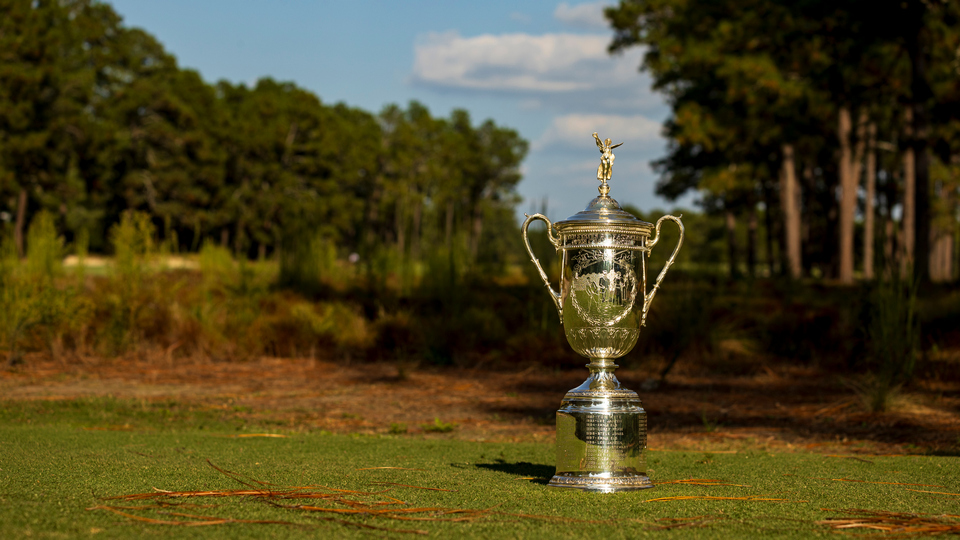
The 129th U.S. Open will be played June 14-17, 2029, at Pinehurst Resort & Country Club’s No. 2 Course in the Village of Pinehurst, North Carolina. The confirmed dates place the championship back at the same venue that hosted Bryson DeChambeau’s victory just five years earlier, and extend Pinehurst’s run as the most frequently used U.S. Open site in the modern era.
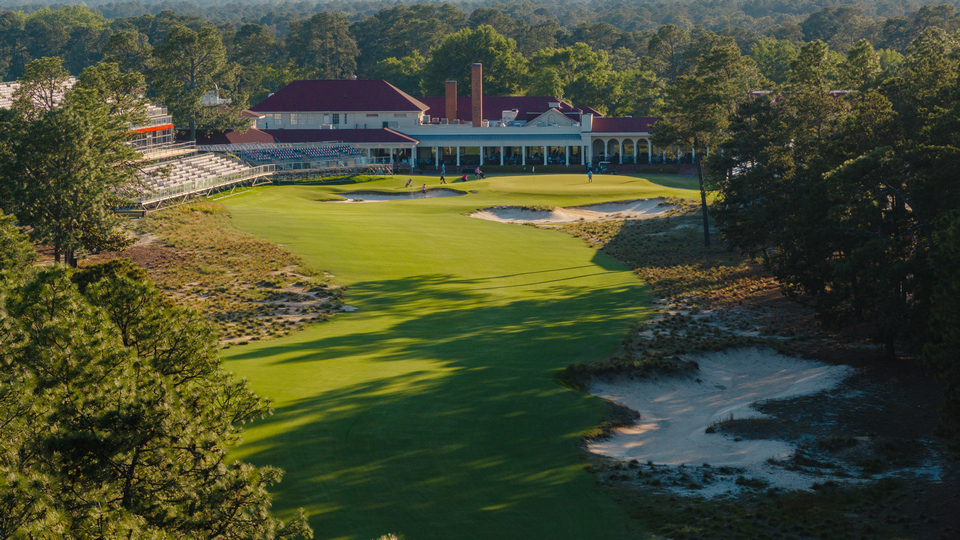
The 2029 stop will be the fifth U.S. Open contested on No. 2, following championships in 1999, 2005, 2014 and 2024. It is part of an arrangement that traces back to September 2020, when the USGA designated Pinehurst as its first U.S. Open anchor site. Under that framework, the championship is already pencilled in at Pinehurst for 2035, 2041 and 2047 as well.
Back-to-Back Men’s and Women’s Opens
The 2029 championship will also reprise a format last used in 2014, when Pinehurst No. 2 hosted the men’s and women’s U.S. Opens in consecutive weeks. Martin Kaymer won the men’s title that year, and Michelle Wie captured the U.S. Women’s Open the following week.
Pinehurst Resort president Tom Pashley said the dual staging reflects the depth of the resort’s partnership with the USGA: “Anchor site planning has allowed us to be very strategic and think long-term about how we can produce the best championships together.”
The back-to-back arrangement is logistically demanding but gives the USGA an operational advantage. USGA chief championships officer John Bodenhamer said the anchor-site model helps venues and host communities plan years in advance: “They’re able to look further ahead and do things with the community and the golf courses … with permitting and facilities and public safety, parking and transportation.”
The Anchor-Site Strategy
Pinehurst is one of three anchor sites the USGA has established for the U.S. Open, alongside Oakmont and Pebble Beach. The strategy locks in recurring venues on a long rotation, giving the USGA scheduling certainty through the 2040s while allowing those courses to invest in infrastructure between championships.
Bodenhamer framed the approach as a commitment to both tradition and quality. “This is about putting our stake in the ground and establishing a foundation, partnering with what we think of as the cathedrals of the game in America,” he said.
Beyond the U.S. Open, Pinehurst is set to host six additional USGA championships, including the 2027 U.S. Women’s Amateur, the 2032 U.S. Junior Amateur and U.S. Girls’ Junior, and the 2038 U.S. Amateur on No. 2.
Championship History on No. 2
Pinehurst No. 2 opened in 1907, designed by Donald Ross. The course underwent a redesign led by Robert Trent Jones in 1974, before Bill Coore and Ben Crenshaw completed a restoration of Ross’s original vision in 2010. For the 2024 U.S. Open, No. 2 was set up as a par-70 layout playing 7,548 yards.
The four previous U.S. Open winners at Pinehurst No. 2:
- 1999: Payne Stewart, 279
- 2005: Michael Campbell, 280
- 2014: Martin Kaymer, 271
- 2024: Bryson DeChambeau, 274
The course has also staged the 1936 PGA Championship, the 1951 Ryder Cup, the 1962 U.S. Amateur and the 2014 U.S. Women’s Open, among other events. Pinehurst says No. 2 has hosted more single golf championships than any other course in America.
What Comes Next
Tickets for the 2029 U.S. Open are expected to go on sale around the time of the 2028 championship, with details to be posted on usga.org. Player groupings and tee times will follow the USGA’s standard practice of being announced the Tuesday before play begins.
For Pinehurst, the 2029 double-header sits within a schedule that stretches into the 2040s. After hosting back-to-back men’s and women’s U.S. Opens that year, the resort is already confirmed for three more U.S. Opens, in 2035, 2041 and 2047, plus a slate of amateur championships in between. Few venues in American golf have as prominent a place on the sport’s long-term calendar.
Hero image: USGA/Chris Keane

Simon Bale
Simon Bale is the publisher of Golf Today. A low single-figure handicap golfer, he was previously a major shareholder and course reviewer for Top100GolfCourses.com for over a decade, starting in 2010. Through this role, he developed extensive knowledge of golf course design and architecture while playing more than 300 courses worldwide.