You’ve been grinding on the range for months, and your scores haven’t budged. The bucket of balls is gone, your hands hurt, and you still cannot figure out why your driver keeps going right. Does this scene sound familiar? The problem is not the feedback. And that’s exactly why a growing number of PGA professionals are ditching the traditional range lesson format and moving coaching indoors, where golf simulators for coaching are giving both instructors and students something the driving range never could: data you can actually act on.
Why PGA pros are moving coaching indoors
The shift to simulator-based lessons is not just a short-term trend; it is a response to what golfers truly need. On a traditional driving range, a coach watches your swing, gives verbal cues, and may record a video. The ball flies, but you are left guessing whether that fade was 12 yards or 20.
According to the National Golf Foundation, total golf participation in the U.S. climbed to 47.2 million in 2024, with 6.2 million Americans using simulators in the past year, marking a 73% increase compared to pre-pandemic levels. Nearly 29% of simulator users reported playing more on-course golf after training indoors, suggesting these tools are truly helping people improve.
Simulators change that equation entirely. Every single shot gets measured, recorded, and displayed in real time. Instructors can show you exactly what your clubface was doing at impact, how your swing path contributed to that slice, and what your spin numbers need to look like to hold a green from 150 yards.
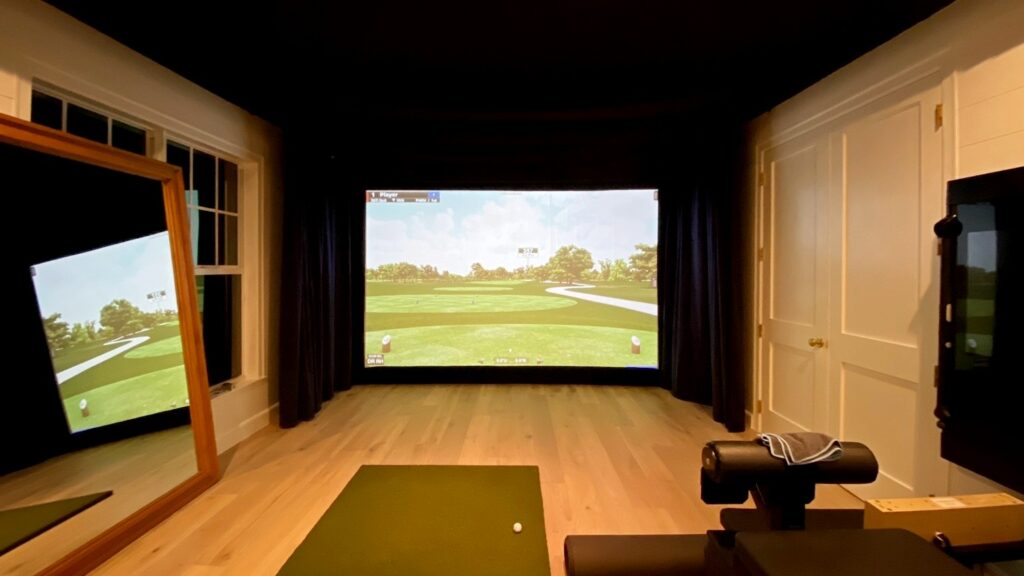
What simulators actually track (and why it matters)
Modern golf simulators don’t just show you where the ball went. They tell you why it went there. Here’s a breakdown of the core data points most coaching-grade systems measure:
| Metric | What It Tells You |
| Ball Speed | How efficiently you’re transferring energy to the ball |
| Launch Angle | Whether your trajectory is optimized for distance and control |
| Spin Rate | The reason the ball curves, balloons, or drops short. |
| Club Path | The direction your clubhead travels through impact |
| Face Angle | Where the clubface points at the moment of contact |
| Carry Distance | True distance in the air, removing roll and wind guessing |
For PGA coaches, this data eliminates guesswork. Instead of saying, “I think your face is a little open,” they can point to exact numbers and show you the fix in real time. Companies like Golfbays have made this technology increasingly accessible for home setups and coaching studios alike, pairing launch monitors, Foresight, and TrackMan with full simulator enclosures that replicate the same environment pros train in.
The ability to isolate specific variables is what makes simulator coaching so effective. If your coach adjusts your grip and your face angle shifts by two degrees, you both see it instantly. There is no guessing or waiting for the next lesson.
How simulator lessons differ from traditional range coaching
If you’ve only ever taken lessons on a driving range, simulator coaching will feel like a significant upgrade. Here’s what sets it apart:
- Instant visual feedback. High-speed cameras capture your swing frame by frame. Your coach can pause, rewind, and overlay your positions against tour-level benchmarks, which is impossible on a windy range.
- Controlled environment. Wind, sun, rain, and uneven range mats all add variables that muddy feedback. In a simulator, conditions stay constant, ensuring that every swing produces clean and comparable data. This phenomenon is one reason golfers are turning to simulators for year-round play in growing numbers.
- On-course simulation. Great coaches do not just fix mechanics; they teach course management. Simulators allow instructors to put you on virtual versions of real courses to work through shot selection and strategy.
- Session tracking over time. Your coach can pull up numbers from three months ago and show you exactly how much your spin rate has dropped or how your dispersion pattern has tightened. Progress becomes measurable instead of anecdotal.
What to expect from your first simulator lesson
Walking into a simulator for the first time can feel overwhelming. There is plenty of tech, numerous numbers, and a large screen staring back at you.
Most coaches begin with an assessment, having you hit a series of shots while the simulator captures baseline data. This helps them identify areas for improvement. From there, the lesson will focus on one or two key adjustments rather than overhauling your entire swing.
Sessions typically run 45 to 60 minutes, and many coaches send a data summary afterward so you can review it between lessons. According to research, the global golf simulator market was valued at $1.74 billion in 2024 and is projected to reach $2.9 billion by 2030. This growth is encouraging more coaching facilities to invest in the technology, leading to more options and competitive pricing for you.
Expect your coach to reference the data regularly. They might say something like, “Your club path is 4 degrees to the right, and your face is 2 degrees open. That creates your push-fade pattern.” Then, they will give you a drill, and you will hit a few shots while both of you can see if the numbers improve in the right direction.
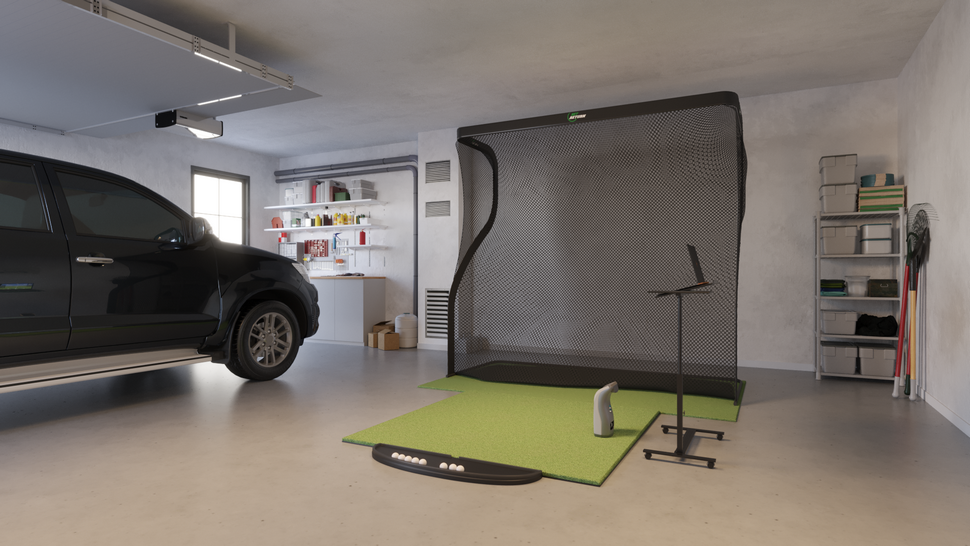
Who benefits most from simulator coaching
The short answer: just about everyone. With the golf industry continuing to grow across nearly every demographic, coaching technology is reaching a wider pool of players than ever before. This makes it easier for more golfers to benefit from these advancements.
- High-handicappers benefit because simulators pinpoint the two or three issues causing the most damage, rather than trying to fix everything at once.
- Junior golfers stay engaged through gamified elements, while coaches use the underlying data to build structured, measurable fundamentals. The growth of indoor golf facilities and coaching partnerships is also making simulator-based instruction more widely available across skill levels.
- Mid-handicappers plateau after fixing the big mistakes but struggle with the more subtle ones. Simulators help uncover those hidden patterns.
- Low-handicappers use simulator coaching to fine-tune shot shapes, dial in distance gaps between clubs, and simulate tournament pressure.
Frequently asked questions
Are golf simulator lessons worth the money?
For most golfers, yes. The data-driven feedback is significantly more detailed than what you’d receive on a range. You leave with specific numbers to track and clear benchmarks to hit, making each lesson more productive.
How accurate are golf simulators for coaching?
High-end launch monitors like TrackMan and Foresight’s GC Quad measure ball and club data with accuracy levels that PGA Tour players trust for their training. Consumer-grade options have also improved dramatically recently.
Can beginners take simulator lessons?
Absolutely. Simulators are arguably more helpful for beginners because coaches can identify and correct fundamental issues immediately. The visual feedback loop accelerates the learning process compared to traditional instruction.
How often should I take simulator lessons?
Most coaches recommend sessions every one to two weeks to start. This gives you enough time to practice between lessons while keeping momentum. Once you’ve built consistency, monthly tune-ups often work well.
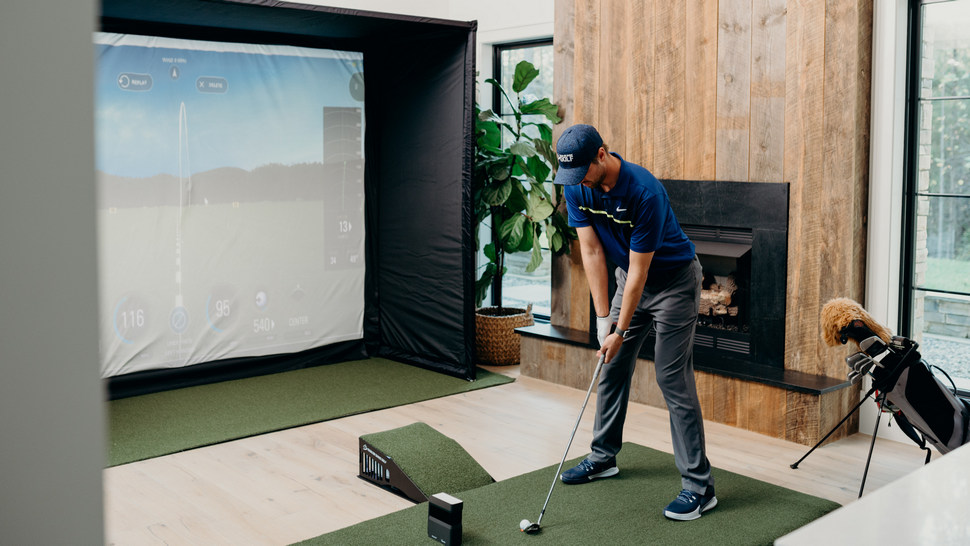
Do I need my simulator to benefit?
Not at all. Most PGA coaches offering simulator lessons have their setups, and indoor golf venues like GOLFTEC also provide access to simulators with on-site instructors.
Key takeaways
- Golf simulators provide PGA coaches with real-time data on ball speed, spin, launch angle, club path, and face angle, removing guesswork from lessons.
- Simulator participation has surged 73% since pre-pandemic levels, with 6.2 million Americans using simulators annually.
- Controlled indoor environments produce cleaner data than range lessons, letting coaches isolate and fix specific swing issues faster.
- Longitudinal session tracking lets you measure real progress over weeks and months.
- Simulator coaching benefits all skill levels, from beginners learning fundamentals to low-handicappers fine-tuning shot shapes.