For a small island in the Atlantic, Madeira certainly packs a punch. It’s the birthplace of Cristiano Ronaldo, known for its fortified wine, the famously stilted Funchal airport, and spectacular scenery, including the Laurisilva forest, a unique ancient laurel woodland and UNESCO World Heritage site. But unless you’ve been a keen follower of the DP World Tour (formerly the European Tour) over the past two decades, you probably don’t think of it for its golf. I’m here to assure you, though, that a golfing holiday on this wonderful island is more than worth your time.
I’d been lucky enough to visit twice before on family holidays, so when TAP Air Portugal invited Golf Today to sample the courses on offer, I couldn’t wait to go back.

Set in the North Atlantic Ocean, about 370 miles off the northwest coast of Africa and 620 miles southwest of Lisbon, Madeira is just a four-hour hop from London (a touch longer from northern airports), with direct flights into Funchal. Getting there won’t break the bank either, return fares with Tap Air Portugal from London start at around £177 in Economy or £477 if you fancy Business Class. From Manchester, prices are similar, at roughly £171 in Economy and £481 in Business, with all taxes and charges included.
Flying with TAP Air Portugal is a breeze. All standard economy seats give you enough room to stretch out (79cm of legroom) without feeling crammed in, and the food and drink options more than cover any mid-flight cravings. For golfers, taking your clubs won’t cost you an arm and a leg either. At €40 each way (€80 return), you can travel with your own set, and let’s be honest, that’s far better than having to get used to unfamiliar shafts and heads.
If you’re connecting via Lisbon, you can add the TAP Air Portugal lounge to your ticket or simply pay for access when you arrive. With a layover of more than three hours, it’s well worth it. Once inside, all drinks (including beer and wine), food, and snacks are included, and it’s noticeably calmer than the main terminal. There are televisions, comfortable seating, and a great view of the runway, perfect if, like me, you’re a bit of a plane enthusiast.
All in all, if you’re heading to Madeira, TAP makes for a smooth and stress-free choice, making it a fitting start to a destination that’s all about slowing down and soaking it in.
Born out of volcanic activity over five million years ago, the island is characterised by its rugged coastline and dramatic mountains that rise above the clouds, wrapped in lush subtropical vegetation that immediately makes you feel a world away from home.
As the island is neither large nor flat (35 miles long and 13 miles wide), houses and buildings climb steadily up the rising landscape, linked by winding roads into the hills. It makes for a remarkable sight when you’re landing by plane or coming into the dock on the ferry, while the singular road from the airport into Funchal centre hugs the coastline and sweeps over steep ravines running down from the island’s peaks. Suffice to say, it’s one of the more enjoyable arrivals into a capital city I’ve experienced.
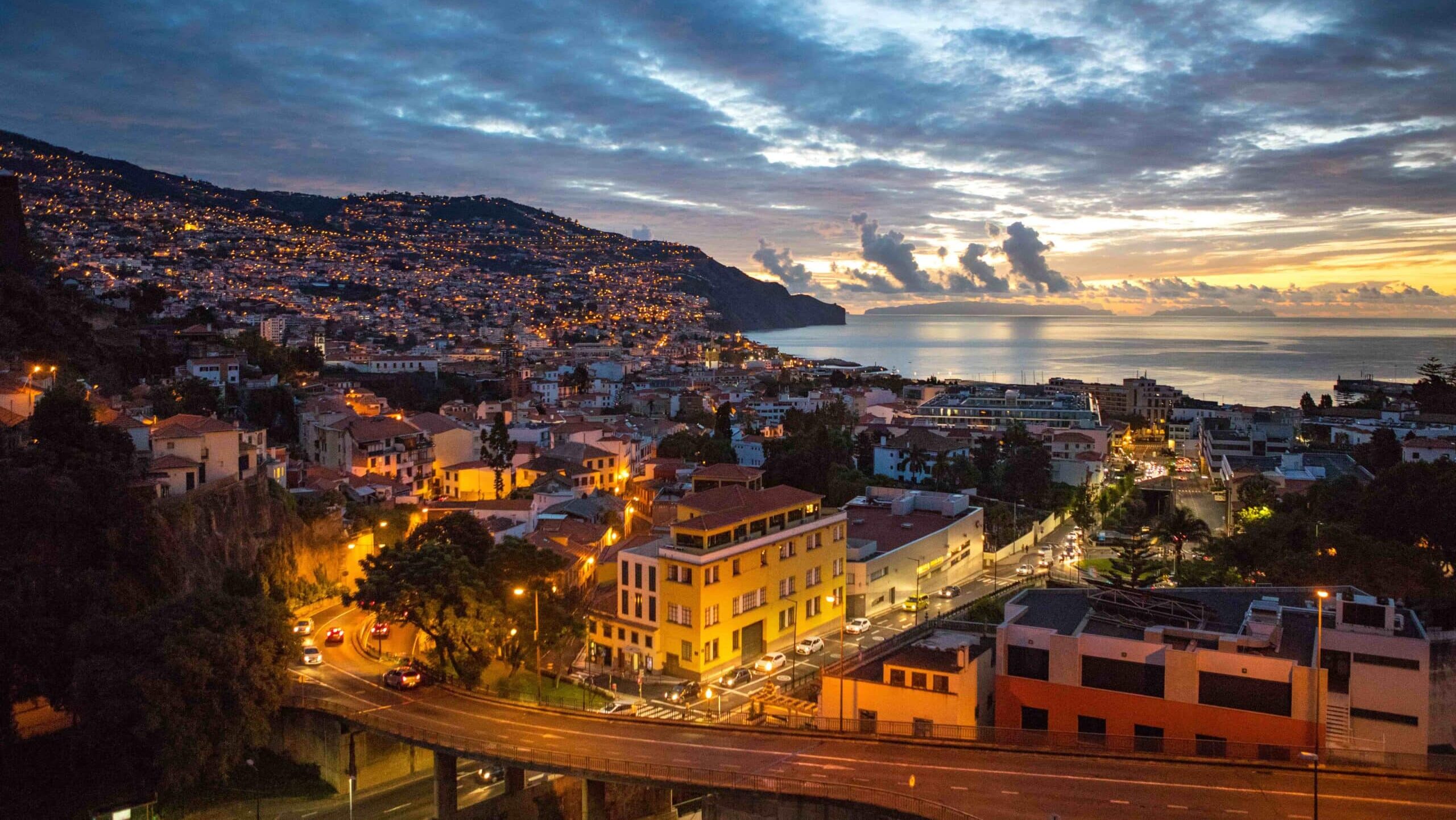
We stayed at Vila Baleira Funchal, just outside the bustling centre but still within walking distance of it all, a spot I thought was pretty much ideal. The hotel was tidy and practical, with spacious rooms that did the job nicely, and a rooftop bar and pool overlooking the inviting blue of the Atlantic. If you plan to spend days exploring the city, venturing further across the island, playing top-class golf courses, or dipping into the natural pools carved out of the rocky coastline, it’s a smart and dependable base. If, however, you’re after a bigger hotel with lazy afternoons by the pool, more on-site activities, and wider food options, you’ll find plenty of four- and five-star choices that give you the best of both worlds.

What to do in Funchal
Funchal is a very walkable city, though you’ll need to be okay with the semi-regular inclines and declines as you wind your way through the 600-year-old capital, but it’s well worth the exercise. Around every corner you’ll find quaint restaurants and bars (be sure to try the moreish bolo do caco, a garlicky flatbread that seems to appear at every meal), with historic architecture and vibrant colours along the way.
Beyond the meandering strolls and the gems you’ll stumble across, there are plenty of activities and outings that make Funchal a genuinely fun base for exploring Madeira. You can start with a ride on the cable car up to Monte or the Botanical Garden, where the views over the city and Atlantic are sensational (on a clear day that is), and the gardens themselves are lush and peaceful. From Monte, you can hop into one of the iconic wicker-basket sledges (carreiros in white and hats included) for a strangely exhilarating ride back down into Funchal, something I had the pleasure of trying on a family holiday back when I was a young whippersnapper.

Or, if you’re after something more active, there are hiking trails that lead out from the city, some following the island’s levadas (old irrigation channels unique to Madeira, now doubling as scenic walking trails through mountains and forests), others climbing high into the hills with spectacular views. Or, if the sea is calling, you could surf, sail, paddleboard, or head out from Funchal harbour on a whale and dolphin-watching tour, where you’ve a great chance of spotting them in the wild.

All in all, Funchal is a brilliant spot for either a full week or just a few days before heading off to another part of the island. And whether you’re taking it easy or packing in a full itinerary, it’s a place that always has more to offer than meets the eye.
Golf in Madeira
Santo da Serra
Perched high above the bay of Machico, Santo da Serra Golf Club offers golf with a view and then some. First opened in 1937, the course was given a complete makeover in 1991 by the legendary Robert Trent Jones Sr., who transformed it into a spectacular 27-hole layout set against one of the island’s most dramatic backdrops.
The Machico and Desertas loops are the ones most often used for tournament play, including the Madeira Islands Open, once a regular fixture on the European Tour, while the Serras nine offers a slightly gentler walk without losing its challenge. The conditioning is first-class too, with fairways, greens and even the semi-roughs kept to tournament standards at all times.

The Madeira Islands Open was a long-running stop on the European Tour, first played in 1993 and running until 2015. Most years it was hosted at Clube de Golf do Santo da Serra, with a short stint over at Porto Santo Golfe (which we’ll get to shortly) between 2009 and 2011. In its later years, it became one of two European Tour events held in Portugal each season, alongside the Portugal Masters, and gave the island a regular spot on the professional golfing map.
I first experienced Santo da Serra back in 2008 on a family trip (which, naturally, coincided with the European Tour event, as most holidays did) and immediately fell in love with the place. As a youngster, being up in the mountains was something else: one moment you’d have breathtaking views, the next you’d be wrapped in cloud cover, only for the skies to break again and the sun to flood across the course. Those shifts in atmosphere etched themselves into my memory.

I vividly remember watching a young Brooks Koepka drive the 1st on the Desertas course, 395 yards off the tips, while the group on the green looked back in the same amazement as the spectators. Holes 2 to 4 on the Machico course also stuck with me from that first walk. The backdrop is nothing short of immense, especially the par-5 3rd, where the approach demands a shot over a ravine dropping off to the left. Seeing players launch the ball into the blue sky towards a wide but shallow green guarded by bunkers was unforgettable.
And then came the par-3 4th, which provided one of those proper “Holy S***” moments. Playing 202 yards off the tips, the tee shot forces you over another plunge down the mountainside, thick with vegetation and trees, into a green that clings to the cliff edge. From there, you look out across the bay and the Atlantic from 1,000 feet above sea level; a view, and a hole that you’ll remember for years to come.

I returned again in 2012 with my old man, when Santo da Serra resumed hosting duties, and we enjoyed yet another brilliant trip full of memories on the island and the course. Sadly, my dad passed away at the end of January this year, so when I was offered the chance to come back and play the same course I’d once walked with him, I absolutely couldn’t wait, and boy, it didn’t disappoint.
Every shot, every hole, every view is a treat. From standing on the par-5 3rd fairway, hoping to recreate the risky second shot over the ravine, to teeing it up on the signature par-3 4th, to seeing if I could channel my inner Koepka and drive the 1st on the Desertas, it was an incredible experience, and one I’m so grateful to have ticked off.

It also goes without saying that the staff were friendly, welcoming, and always keen to help, while the post-round lunch was superb, complete with traditional Madeiran dishes and a cold local lager. To round it off, I can only say this: make sure you play this course at least once in your life. Even if you’re on the island for a non-golf holiday, carve out a day to experience it, I promise you won’t regret it.
Porto Santo
Porto Santo is the second inhabited island in the Madeira archipelago, just 11km long and 6km wide. It sits about 50 miles from Madeira itself, reached by a quick 25-minute hop from Funchal or a 90-minute flight from Lisbon. Small, but full of charm.
The island’s showpiece is its 9km stretch of golden sand, soft, powdery and washed by turquoise Atlantic waters. The locals swear by its natural healing qualities, thanks to the sand’s unique makeup, but whether you believe in that or not, it’s the perfect place to switch off and unwind.
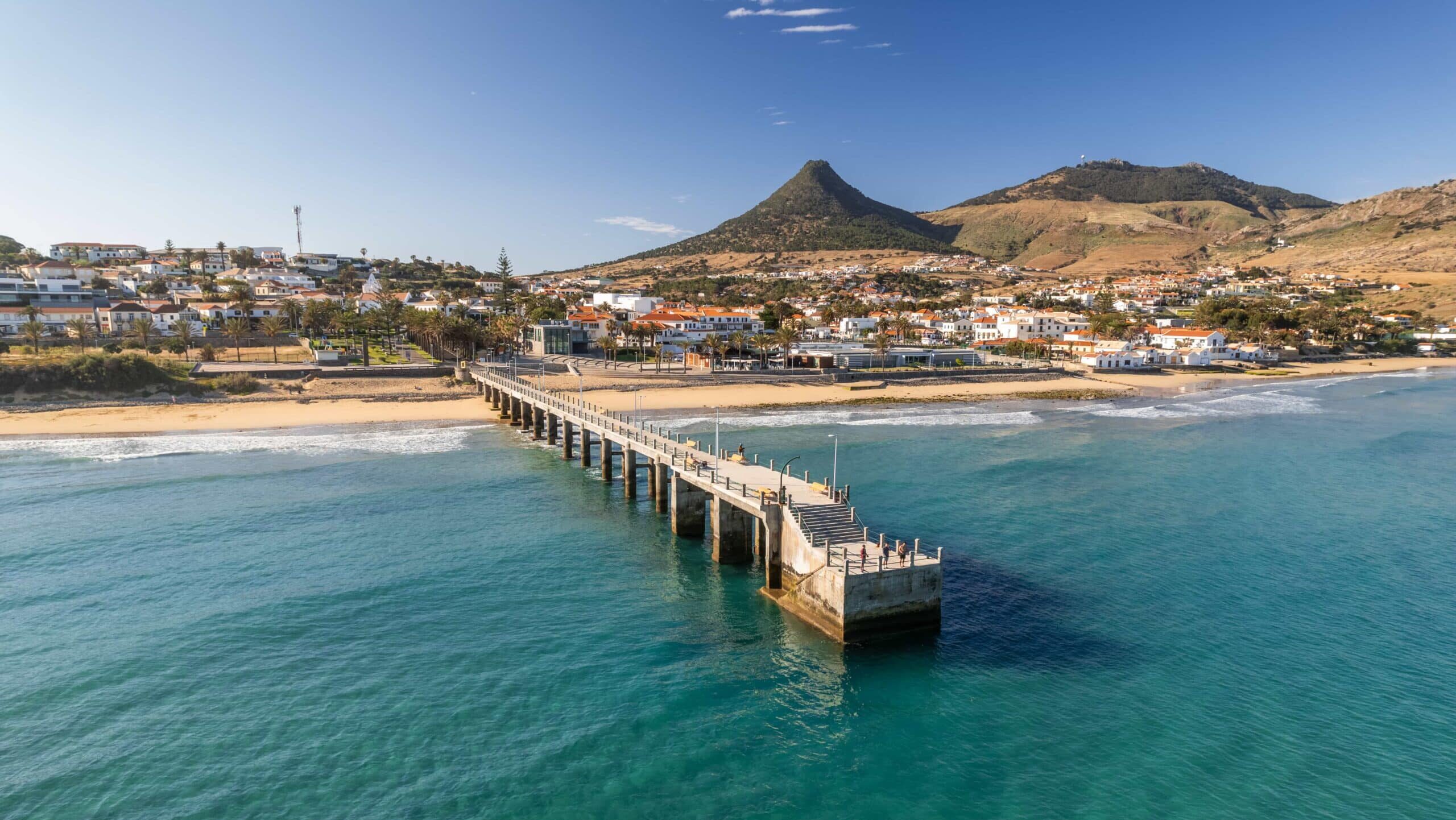
Away from the beach, Vila Baleira is the island’s hub, with narrow streets and the Christopher Columbus House Museum as a reminder of its history. Beyond town, trails and paths criss-cross the landscape, ideal for walking or cycling through Porto Santo’s unspoiled scenery.
Safe, welcoming and wonderfully laid-back, Porto Santo works just as well for a full holiday as it does for a quick escape alongside a trip to Madeira. And, in the centre of the Island, spanning from coast to coast, is the spectacularly unique Porto Santo Golf Club.

Porto Santo Golf Club is a Seve Ballesteros creation that opened in 2004, stretching right across this little slice of paradise in the Madeira Islands. Measuring over 7,000 yards from the championship tees, it’s big, bold and beautiful, with the Atlantic always in sight and a breeze that keeps you honest.
The course splits into two personalities: the south, with lakes and long fairways demanding accuracy, and the north, where holes cling to basalt cliffs and feel almost links-like. The standout stretch is 13 to 15, Porto Santo’s own “Amen Corner”, where the views are jaw-dropping and the golf unforgiving.

True to Seve’s style, the layout runs 6 par-3s, 6 par-4s and 6 par-5s, giving the round a rhythm all of its own. As Seve is my golfing idol, getting the chance to play one of his courses was a real thrill. After just a few holes, it was obvious, this place had Seve written all over it. No internal out-of-bounds, only a handful of lateral hazards, and beyond that, you could pretty much hit it anywhere (within reason). If you found it, you played it, and then scrambled like mad to keep the scorecard tidy, exactly how Seve would have wanted it.

Porto Santo Golf is packed with character, but that’s no surprise with the great man behind the design. From the first tee to the last green, it’s a course full of variety and clever touches, demanding smart decisions as much as solid shots.
Whether it’s the sand, the scenery or Seve’s handiwork that brings you to the island, Porto Santo is the kind of place you’ll be glad you made time for.

Palheiro
The one course I didn’t manage to play on this trip, due to an early flight home, was Palheiro. Just ten minutes from Funchal, it’s built into the hillsides between thick vegetation and pine forest, making the most of the tiny pockets of land Madeira has to offer.

Set within the Palheiro Estate, the 18-hole, par-72 layout winds through pines and sub-tropical gardens, sitting nearly 500 metres above sea level with sweeping views of the mountains and the Atlantic. Designed by Cabell B. Robinson, Palheiro uses the island’s natural drama to full effect. Ridges, valleys, sudden drops, nothing about it looks straightforward, and that’s exactly the appeal.
I’ve only seen the photos and heard the stories, but Palheiro is firmly on my list for next year.
Ponta do Pargo: Faldo’s highly anticipated design
Madeira is soon to get a fourth course, joining the already brilliant tracks on the island, and it’s a very exciting one. Sir Nick Faldo has chosen Madeira as the home for his newest layout, Ponta do Pargo.

Scheduled to open in 2026, the par-72 course sits high on the clifftops with breathtaking views across the island’s remarkable backdrop. Faldo and his team have designed a course that challenges every level of golf, with the route stretching along the famous Miradouro do Fio before returning to a strategically placed clubhouse with panoramic vistas.
During our visit, we got to walk part of the course and see the first sections taking shape. While it’s a way off from being finished (and I’ll be surprised if it meets its 2026 opening), what I saw already hinted at something special. The design perfectly complements the land, carving through the hillside and over the rugged terrain.

It feels like the course won’t have just one signature hole, but several. The standout for me was the 15th: a long par 5 from an elevated tee, playing parallel to the Atlantic, downhill over a ravine with a slight dogleg left toward the lighthouse closest to the sea (pictured above). Standing on the blocked-out tee box, I could almost feel the excitement of launching one down the hill, and that’s before the fairway and bunkers have been laid.

The course’s exposed location also means the elements will play their part, particularly the wind. As with most Faldo designs, it’s a beast from the tips, but with forward tees, it can be enjoyed by golfers of all abilities.
And I’ll shamelessly leave a cheeky line here: once it officially opens, I’d be more than happy to accept an invitation to play what promises to be a truly spectacular course.
Madeira Golf Passport
For anyone after a golf-heavy trip, here’s some good news: the Madeira Golf Passport offers excellent value across the island’s three courses. For €290 per person, you get three full rounds at Clube de Golf Santo da Serra or Palheiro Golf, or a mix of both, all valid for two weeks. Tee times can even be pre-booked directly with the clubs before you travel.
If you fancy adding Porto Santo into the mix, there’s a €415 option. This gives you four full rounds across Santo da Serra, Palheiro, and Porto Santo Golfe, again valid for two weeks, with tee times bookable in advance.
For the keenest golfers, the €420 package locks in five full rounds at Santo da Serra and Palheiro, or a combination of both, also over two weeks, with pre-bookable tee times so you can tailor your holiday to meet your golfing needs.
Verdict
I’ve been to Madeira twice before, but it didn’t lessen my excitement to return, and after my third visit, I’m already looking forward to a fourth. There’s something special about the island; it has a way of calming you and pulling you out of the rat race and fast-paced life at home. Whether you’re there for the sights, strolling the streets of Funchal, exploring the landscape and adrenaline-fuelled activities, enjoying the superb golf courses, or all of the above, you won’t be disappointed, and it almost certainly won’t be your last time visiting.