

The Patterson Club
Fairfield, Connecticut, USA
Architect: Robert Trent Jones, Sr. (1947)
Updated: Jaeger Kovich (2026)
7,048 Yards / Par-71
74.5 Course Rating / 133 Slope
The career ascendancy of Robert Trent Jones, Sr. is a remarkable story. The renowned architect was beginning to build his own brand identity after the conclusion of World War II. Jones learned much from his earliest days in the profession under the tutelage of renowned Canadian designer Stanley Thompson.
One of his earliest solo successes came in Connecticut — The Patterson Club. Very little is mentioned about this private 18-hole layout since the RTJ, Sr. career arc jettisoned upwards when he designed the acclaimed Peachtree in Atlanta in 1948 and then one year later piggybacking with the highly touted Dunes Golf & Beach Club in 1949 in the Myrtle Beach, SC area.
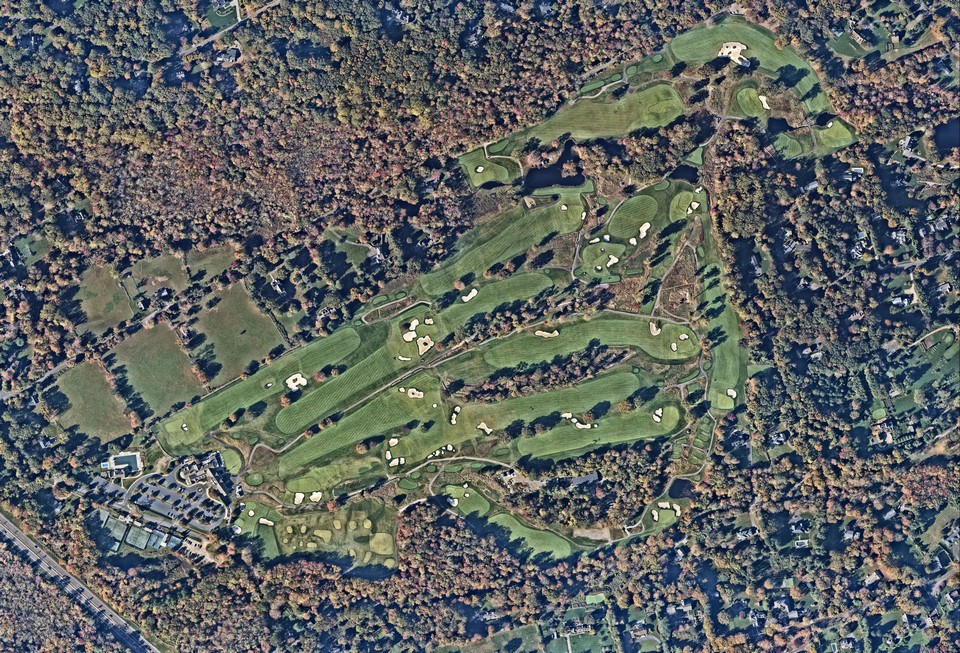
The Patterson Club is located on a 170-acre site and occupies gentle rolling terrain. Interesting how the entrance to the property leads into a quick uphill climb to where the clubhouse is located. The design features a narrow point in which the opening and closing holes from each side are fitted into snugly.
After the global pandemic a number of clubs / courses throughout the United States opted to engage in a comprehensive effort by updating their total offerings. The Patterson Club set forward a considerable sum — $20 million. Work commenced July 7, 2025 and concluded on Memorial Day weekend 2026.

The primary thrust centered on a few key elements.
$15 million was budgeted for the golf course renovation. In that sum — $9 million was basically allocated for needed infrastructure — bunker liners, irrigation, dredging, cart paths, drainage. $5 million was used to transform the 17th, 18th holes and driving range and rebuild every green and tee to maximize the overall golf experience.
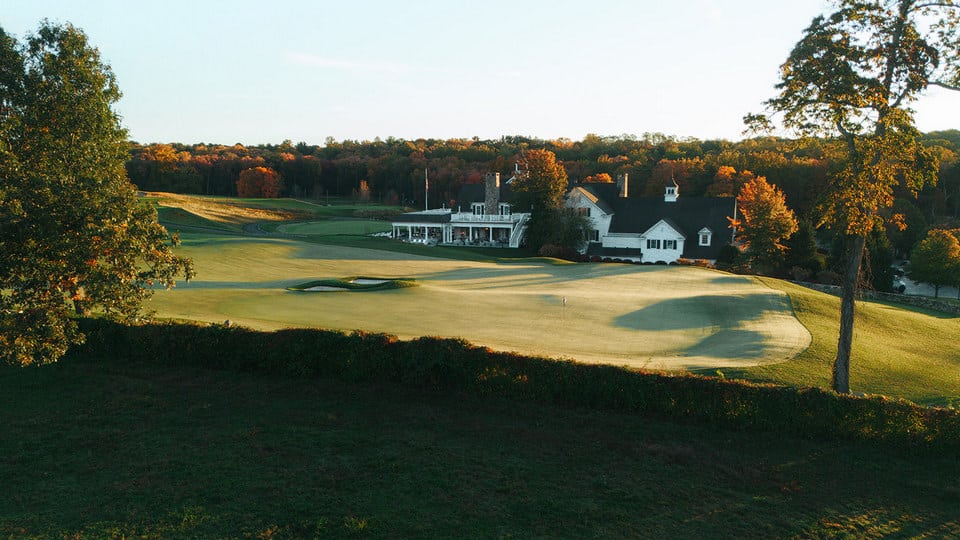
$5 million was spent on the clubhouse to renovate and transform the inside bar, dinning area, turn building, starter shack and create an outside bar area while maximizing the outdoor dining area. Coming up in October 2027 the club will build a 3-stall indoor teaching building at the driving range which will complete the overall project.
One of the most difficult issues before such a major investment is implemented is who to hire as the architect for such an extensive project. Plenty of courses err in such a crucial decision and often times the person brought on board does less of a renovation and more of a total rebuild. That can lead to the original character of the property being obliterated for a complete makeover.
Securing the right person is no easy task. Architects who are interviewed may pledge to do what’s called upon but then as the work commences, they slide into long ingrained habits in which their fingerprints wipe away those of the original designer.
After the global pandemic ended – numerous clubs were looking to get various projects underway. The demand for qualified architects and shapers was extremely competitive and clubs had to smartly navigate the process while realizing the key necessity in keeping budgeted amounts within reason.
The primary driving force for many clubs was the realization that staying in place would only leave them in a far less competitive position in keeping existing members happy and also simultaneously capturing the attention of prospective new members.
After considerable due diligence, the club opted to hire Jaeger Kovich. Kovich had apprenticed under such luminaries as Tom Doak and Gil Hanse before opting to open his own firm — Proper Golf – in 2014. Kovich had demonstrated past success with his quality updating of the Donald Ross / Herbert Strong layout at Knickerbocker CC in Tenafly, NJ.
One of the main priorities for the club was in reimagining how the existing practice facility could be better utilized. Kovich opted to suggest that the two concluding holes on the inward side — both long par-4s — would be eliminated and replaced with a long par-5 and par-3 holes.
The club had also wisely decided to flip the nines. Interestingly, both of the holes that commence each nine — mid-length par-4s — feature a blind landing area.
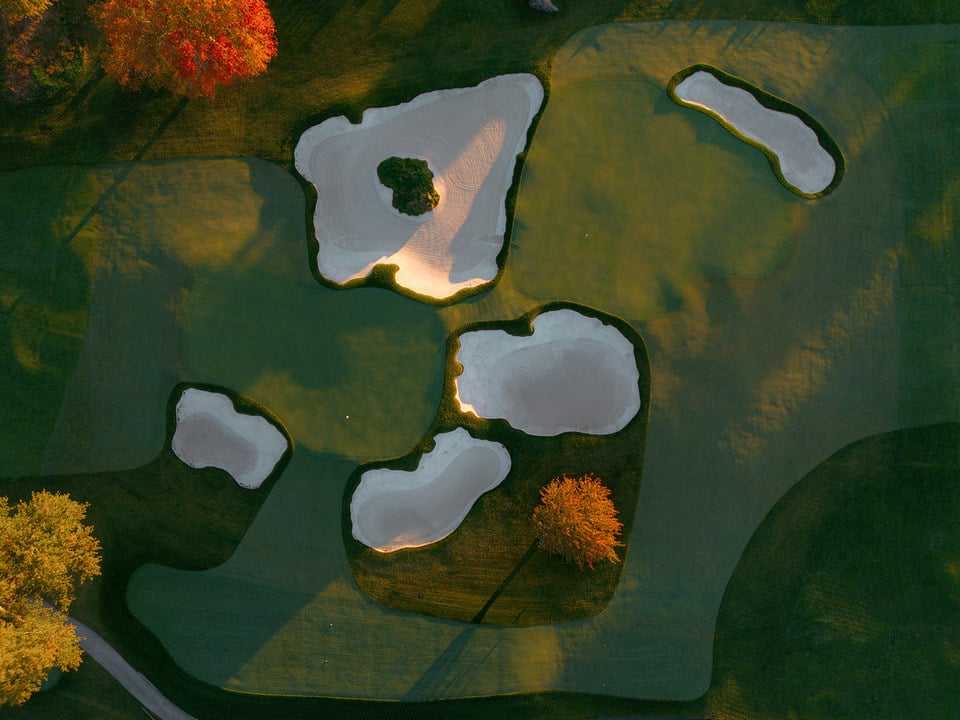
The other major change came with the par-3 15th. Previously, the hole was a very challenging 200+ yard par-3 to an elevated target with flanking bunkers. The hole could quickly serve as a major scorecard crash.
The area in question also presented drainage issues and Kovich devised a plan that would provide for a more practical comprehensive solution. A new par-3 was envisioned to replace the existing one. The hole would be shorter — just under 150 yards – and features a longish narrow green with a fall-off to the left side. This was a keen inclusion given how the other one-shot holes at The Patterson Club were on the longish side.
***
The Patterson Club |
|
| 1st hole — 371 Yards / Par-4 2nd hole — 565 Yards / Par-5 3rd hole — 220 Yards / Par-3 4th hole — 451 Yards / Par-4 5th hole — 195 Yards / Par-3 6th hole — 450 Yards / Par-4 7th hole — 460 Yards / Par-3 8th hole — 600 Yards / Par-5 9th hole — 235 Yards / Par-3 |
10th hole — 425 Yards / Par-4 11th hole — 445 Yards / Par-4 12th hole — 220 Yards / Par-3 13th hole — 395 Yards / Par-4 14th hole — 609 Yards / Par-5 15th hole — 146 Yards / Par-3 16th hole — 283 Yards / Par-4 17th hole — 425 Yards / Par-4 18th hole — 553 Yards / Par-5 |
***
One of the most challenging aspects in any course updating is deciding how much of the previous design — specifically the “look” of the course — is kept in place. There are times when a “new” architect comes onto the scene and opts to completely obliterate the past and insert his own fingerprints on the canvass. Once the original is doctored returning it to its original “look” can be a daunting process. In some cases, clubs that have gone down this path never return and simply become a mindless hodge-podge of various styles being superimposed on the layout.
Kovich did not do that with The Patterson Club. Just as he did with his successful effort at Knickerbocker, he fashioned remedies in alignment with the club’s overall master plan and maintained a smart reverence for what Jones created.
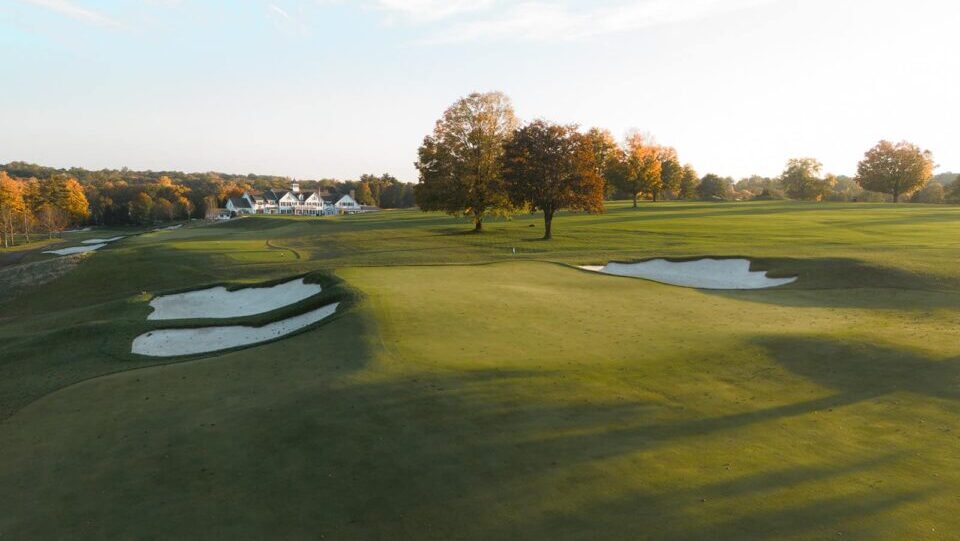
The “new” Patterson Club does have three “new” holes but they do not stand apart – they blend in quite well. Bunker styles were kept in the same manner. The presentation of the architecture is accentuated by the quality turf conditions brought to life by superintendent Jason Meersman and his talented crew.
The Patterson Club has an interesting mixture of holes. Four par-5 holes are offset by having an odd number of par-3 holes — five in total. The course does have several stout two-shot holes – the uphill 4th, the engaging dog-leg right 6th with its devilish elevated green and the reverse situated 7th.
The long par-5 that Kovich created is a decent hole but it’s mainly a longish strip of land with little to distinguish itself until you reach the green. The demanding 9th plays 235 yards and mandates an ideal combination of length and accuracy.
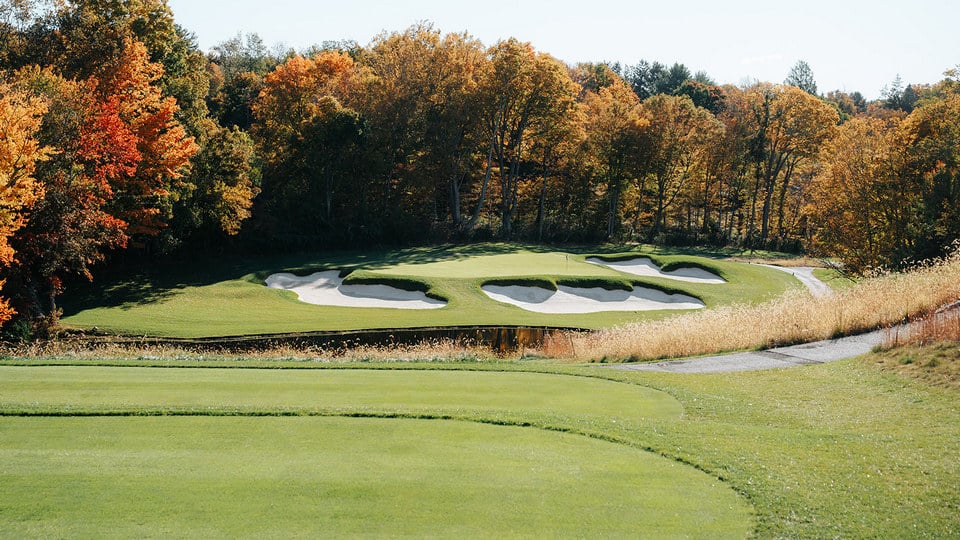
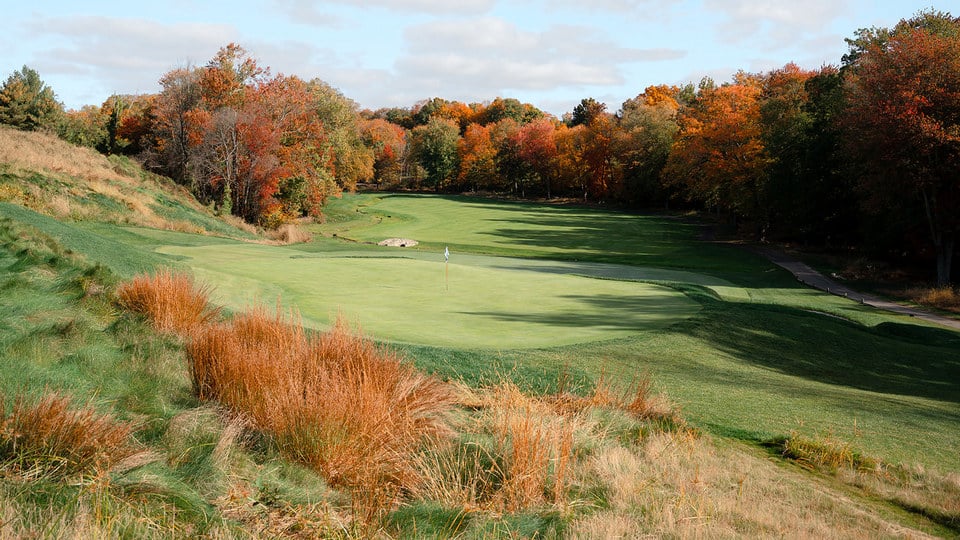
The inward half of holes is the better of the two nines. The uphill blind landing area at the 10th gets that side off to a fine start. The 11th is a quality two-shot hole. The par-3 12th is very good with a penalty area that is quick to snare any shot that drifts too far left. Hole 13 showcases the merits in not having any bunkers — the green is artfully surrounded by mounding that can quickly deflect a half-hearted approach.
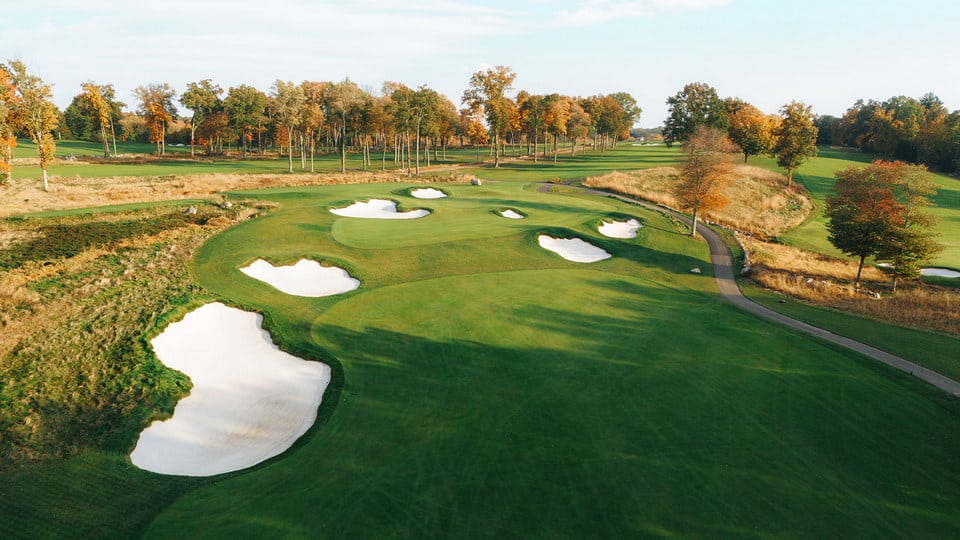
The final five holes at The Patterson Club each provide clear requirements for success. The long par-5 14th is well-protected by a massive fairway bunker complex on the ideal right hand side. The green is then protected by a smallish front bunker and penalty area. The par-3 15th follows and I have opined on the merits of that hole.

Related: Grade “A” Architecture – The Patterson Club
What’s interesting is how RTJ, Sr., created a compelling short par-4 at the 16th. The hole turns gently to the right and has a green situated on an uphill ledge. An array of bunkers must be avoided. Strong players will undoubtedly give it a go to reach the putting surface with their tee shot. Those who miss to the right will face a tricky short pitch to a green that falls away from that side. In the vast number of RTJ, Sr., courses I’ve played you rarely see such a short par-4 of this quality. Having the hole in this part of the routing makes for a series of decisions for player to ponder and the scoring opportunities — both positive and negative — are clearly an issue of concern.
The penultimate hole showcases an uphill par-4 that features an infinity green that makes gauging the exact nature of the approach a difficult proposition
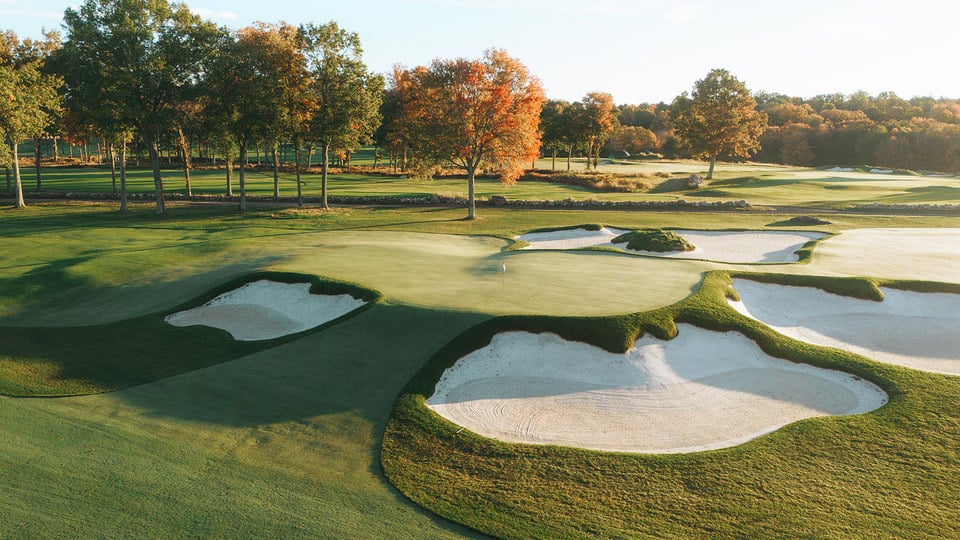
The finishing hole at The Patterson Club is a testing par-5. Fairway bunkers fiercely protect the left side of the landing area and there’s also an out-of-bounds down the entire right side that lurks for those who are careless in executing.
The green sites in a slight dip and strong players can get there in two shots but such a play must be connected to a proper yardage and direction. The internal contours of the green must also be skillfully navigated given the vexing movements encountered.
So, when all of this is added together where does The Patterson Club stand?
Connecticut doesn’t have that many stellar layouts and it’s hard to figure that out given the number of such compelling private layouts inhabiting the landscape with next-door neighbors New York and Massachusetts.
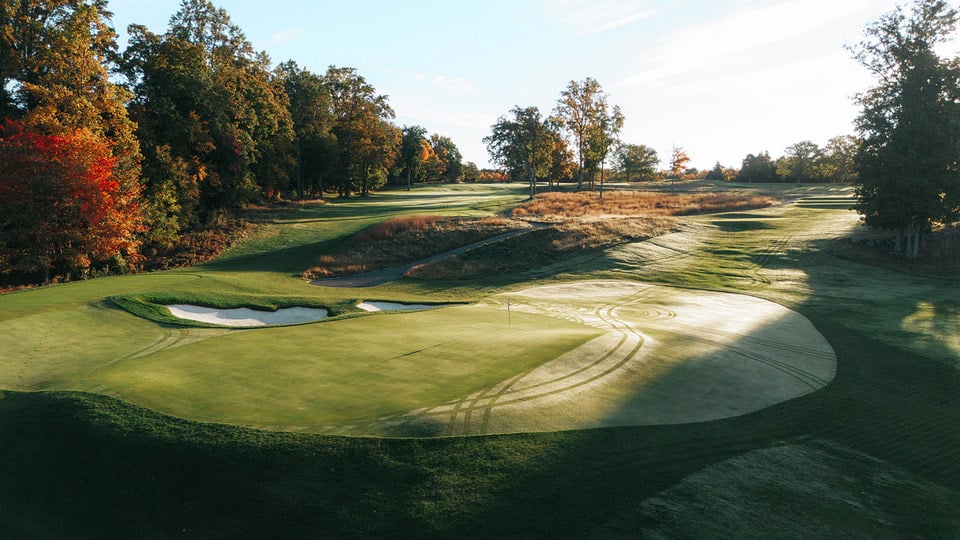
The Patterson Club smartly realized the potential for the overall property could not be attained without a clear and comprehensive game plan. That investment has paid dividends and the work of Kovich and his team has created clear improvements.
On the flipside the club has a number of boorish straight away holes devoid of meaningful tee game strategy. Matters are not helped with the straight-razor fairway cuts and the lack of internal movements.
Overall, there’s a serious uptick in what the course is now. The flow of the holes, the diversity of shots required and the need for players to adjust throughout the round is done well.
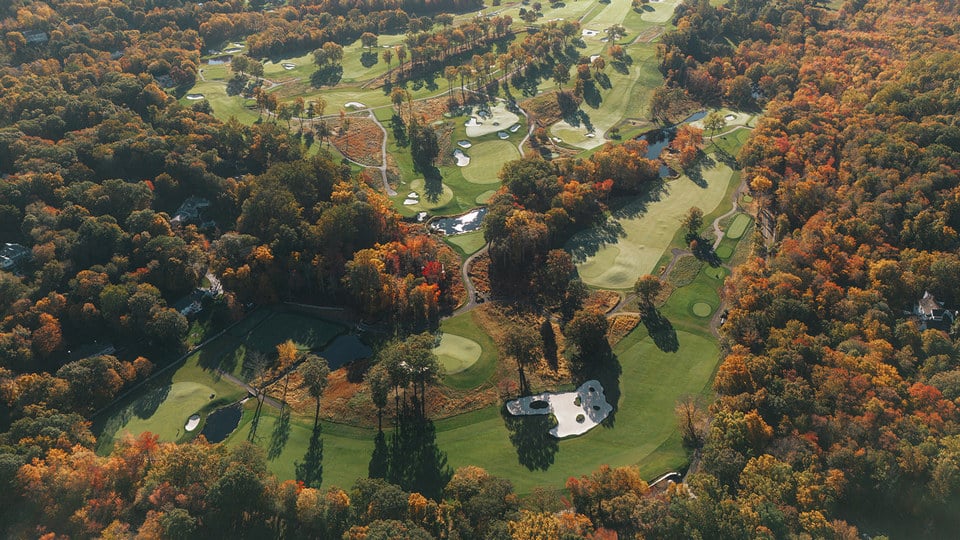
The ascension of RTJ, Sr., was a clear moment when the business of course architecture really lifted off from the rocket pad. Those who are fans of what Jones would later do elsewhere globally can enjoy the framework he put in motion here.
The Patterson Club smartly made a comprehensive assessment of what the property can be and the effort is now front and center.
Bravo.
***
Overall Verdict: BIRDIE +
Images Courtesy of The Patterson Club
***
Ratings AssessmentDouble Eagle Not a hole to be missed. Compelling architecture throughout testing mental and physical resolve. Your heart bumps with exhilaration from 1st tee to 18th green. Eagle + Superior shotmaking values in tandem with related turf quality melding an experience of the highest order. Eagle Like its namesake – flies high in the clouds. Consistent variety with strategic holes demonstrating brilliance at various moments. Birdie + Engaging design providing thoughtful intersections with creative results front and center. Birdie Quality architecture exists but held back by limited standout holes encountered. Par+ Has several holes of note but too many pedestrian ones subtract from the experience. Par Enjoyable but like vanilla ice cream – mainly ordinary. Bogey Little substance of note – has design fumbles that are more prevalent than need be. Double-bogey A total mistake — in need of upgrades with substandard holes, inferior routing and substandard conditioning. Triple-bogey An utter mess. Avoid the pain of the experience and the loss of time / money. ***
|

M. James Ward
A long-time member of both the GWAA and MGWA. The 68-year-old has covered all facets in golf since 1980 — including reporting on over 100 major championships and 13 Ryder Cup matches. His writings have appeared in various outlets. On a personal level, has played over 2,000 courses globally and is lead reviewer for Top 100 Golf Courses.
Previously served for 17 years as national course rating panelist for Golf Digest. Has also personally competed in USGA Championships. Resides in the metro New York City area with his wife Celeste. Favorite quote paraphrased for golf — “You are what your golf score says you are.”