
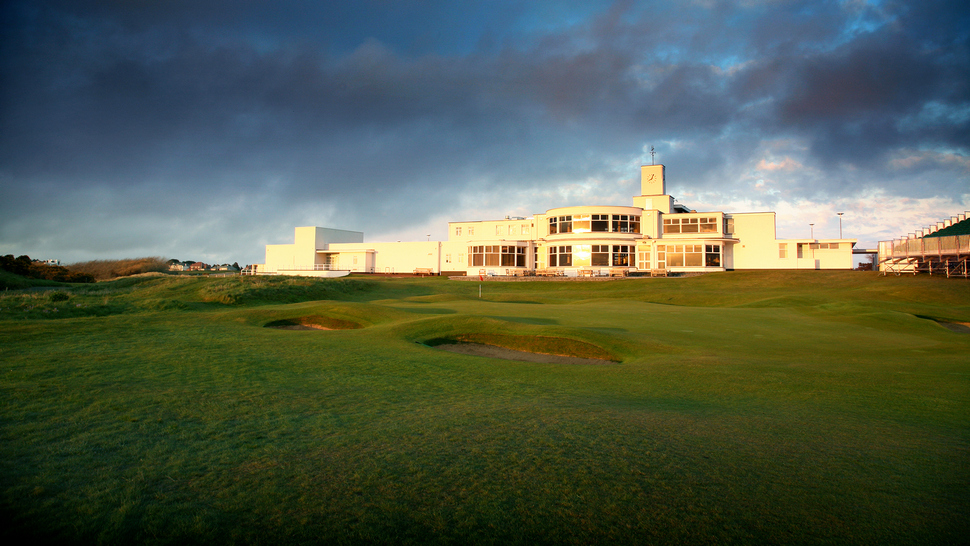
There is a number that should make anyone checking the golf odds on a Saturday evening at a major championship stop and think. Across the last 20 Open Championships, the player leading after 54 holes has gone on to win 12 times. That is 60%. Which sounds reasonable until you remember that the player sitting at the top of the leader board after three rounds is routinely being offered at short odds to win, often odds-on, with the betting market treating the final round as a formality rather than a contest. It is not a formality. It never has been.
The most out there example we have belongs to Paul Lawrie for the Open Championship in 1999. Lawrie was 10 shots off of a lead, which is a kind of deficit that often closes conversations down, rather than open them. Shooting 67 in the final round, Jean Van de Velde collapsed (famously) and Lawrie won in a playoff. The golf odds on Sunday morning would most definitely not have had Lawrie anywhere near the top of the outright market. He won the Claret Jug. These things happen at The Open specifically more than anywhere else in golf, and the reason is not randomness. It is the links.

Why links golf eats Saturday leaders for breakfast
Links courses punish certainty. A player who has spent three days building a comfortable lead on a parkland course can take a degree of control into the final round, managing their game around the known quantities of a still, dry surface. Links golf removes that option. Wind direction can shift between Thursday and Sunday. A coastal morning can turn brutal by afternoon. The same hole that played downwind in round two might play dead into a 30mph headwind in round four, making it effectively a different hole with a different par. Players who led the tournament on Saturday morning have found themselves watching their cushion dissolve not through bad golf but through conditions that made the entire leader board recalibrate in real time.
Billy Horschel knows this better than most at the moment. He led after 54 holes at Royal Troon in 2024, playing the best golf of his career at a major championship. Xander Schauffele shot 65 on Sunday. Horschel finished tied second. The golf odds had Schauffele at a longer price than Horschel going into the final day. Schauffele won. This is not an anomaly. It is the Open Championship doing what the Open Championship does.

The number the market consistently gets wrong
Research across PGA Tour events found that between 2007 and 2012, the conversion rate for 54-hole leaders dropped below 45%. Players entering the final round tied for the lead, when you remove Tiger Woods from the data entirely, posted a scoring average of 71.35 on closing day. The field average in those same rounds was 71.19. The leaders, on aggregate, were scoring worse than the field they were supposed to be pulling away from.
Woods is the outlier that distorts everything. His conversion rate with the lead after 54 holes was 92.5%, which is so far beyond any other player in the history of the sport that including him in general statistics produces a meaningless number. He did not play like a golfer under pressure. He played like the pressure was not there, which is a completely different thing and a talent that essentially no one else has possessed at that level.
Remove Woods and the data tells a different story. Holding a 54-hole lead in a major is genuinely hard. Holding one at The Open is harder than most, because the Sunday conditions at links courses have ended more promising weekends than almost any other single factor in the game.
What this means for how you read the golf odds
The golf odds on Saturday evening at a major are set with heavy weighting toward the current leader. That is understandable. The leader has had three rounds to demonstrate they can play this course, this week, in these conditions. But the odds often fail to sufficiently price the compression effect of Sunday at a link. Players five or six shots back with the right game for the conditions are regularly undervalued compared to what the historical record at The Open actually shows.
BoyleSports covers the golf odds across major championship events, and the Saturday evening market after round three is one of the most interesting windows to look at precisely because the numbers often reflect a tidier narrative than the actual history of the tournament supports. A 60% conversion rate for the 54-hole leader is not the 90%+ that market prices often imply. The other 40% of the time, someone comes from behind. At The Open, that someone has come from as far back as 10 shots and still won the Claret Jug.
The one number worth remembering
Fourteen of the last 20 Open Champions broke 70 in the final round. The average final-round score among Claret Jug winners is 68.55. That is the score of someone going forwards, not someone protecting a lead. The player who wins The Open is usually the one who goes out on Sunday and plays attacking golf, not the one who tries to manage what they built on Saturday. The betting market has a tendency to overweight Saturday’s scoreboard and underweight Sunday’s conditions. That gap is where the most interesting golf odds tend to live.

Andy Newmarch
Being one of the original owners of the ‘Top 100 Golf Courses’ website enabled Andy to travel far and wide playing and rating courses, with the numbers somewhere around 1200 courses in 40 countries. Although now away from the day-to-day grind of course ranking, having a keen eye on course developments is still high on the agenda. Currently hanging on to a handicap index of 8.1 he is probably as competitive on the course than ever but more often than not will compliment this by relaxing at the 19th hole to make up for the hard work!