
4th Hole – Par-5
515 to 331 Yards
Architect: Richard Mandell
Even though new golf course construction has come nearly to a halt in America, there’s been a major move by numerous existing facilities to renovate and upgrade what they provide.
The former 27-hole Braemar Course was completely overhauled by architect Richard Mandell. Now, the course is an 18-hole layout that plays 6,884 yards. Braemar has long been one of the most storied public course facilities in America and in 1969 hosted a PGA Tour event — the Minnesota Classic.

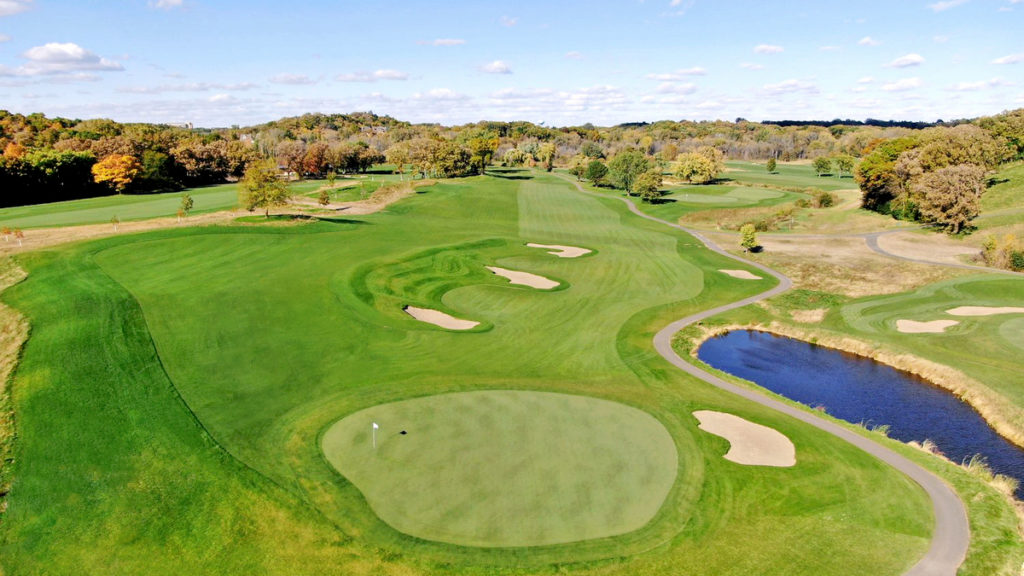
A new tee complex was added and there is a lowering rise between the tees and fairway to open up the view of the first landing area. The fairway was widened and the previous old fairway corridor is now the left side of the hole. Trees were cleared to the right — lowering the ridge along the right side and shaping the new upper fairway area. All new sand bunkers in new locations were done and there is a completely new green complex in a new location.
The 4th is the first of three par-5s on the outward side. The hole presents immediate decision for players to decide upon as the hole is also the first of several split fairway holes. Going in either direction presents it own series of possible outcomes and it’s up to the players to link their respective skill level accordingly.
One of the keys of the hole comes with its overall presentation. “One reason I am not a big fan of trees on golf courses is because they cover up some of the best land features of a site. At Braemar, that was very evident in the design of the 4th hole,” said architect Richard Mandell. “A scattering of random trees covered up a bluff that sat about 30 feet above another flat directly to the left. Right away, I zeroed in on the possibility of a series of bunkers cut into the slope that connected the two areas.”
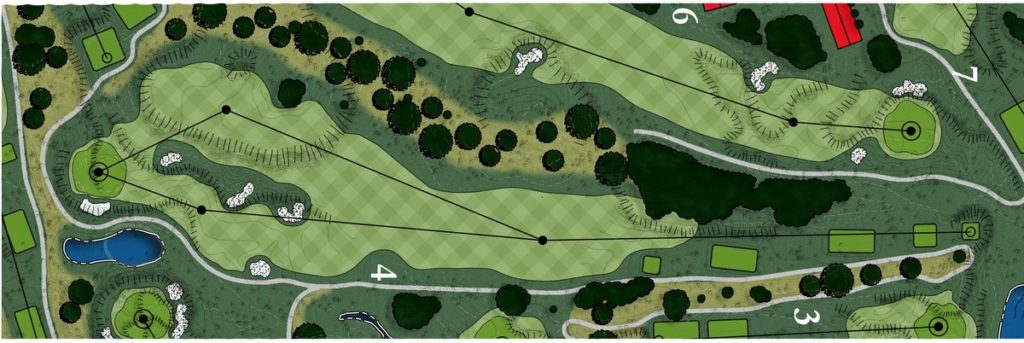
Elasticity is front and center at the 4th — appealing to the widest level of players is no small feat to accomplish since stronger players confront certain specific issues versus those of lesser length. “The strategy of the hole began to evolve with the split-fairway idea, something, I am always seeking out in my design efforts and was able to pull off multiple times at Braemar,” said Mandell.
“In order to make both routes work, I had to develop strong incentive for golfers to take the longer route to the right considering it was much higher than the direct route. But four fairway bunkers and a pond separated by a narrow strip of fairway is enough to deter even the most accurate golfers at least some of the time.”
Ground movement was also emphasized so that a combination of aerial and land could impact the play of varying handicap levels.
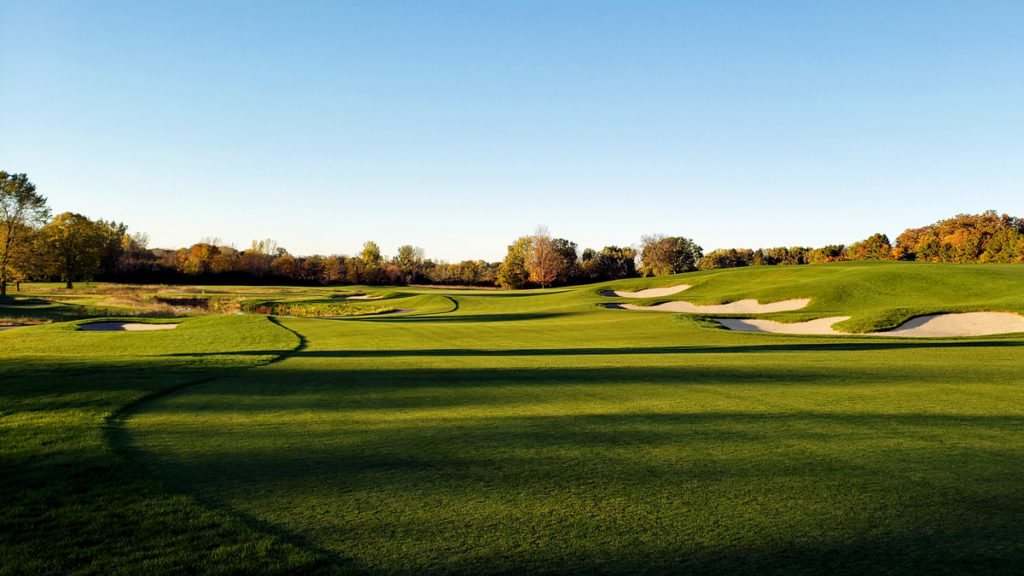
“One feature of the upper route we emphasized is the chance for the better golfer to use the strong right to left slope to shape a wood or long-iron from right to left. Properly executed, the shot should kick on the downslope and roll onto the putting surface from there,” said Mandell. “Another favorite aspect is the way the upper fairway seamlessly rolls into the putting surface — allowing for the approach to affect the shot.”
***
For more info go to:
https://www.edinamn.gov/153/Braemar-Golf-Course
Image/schematic credits: Richard Mandell Golf Architecture

M. James Ward
A long-time member of both the GWAA and MGWA. The 68-year-old has covered all facets in golf since 1980 — including reporting on over 100 major championships and 13 Ryder Cup matches. His writings have appeared in various outlets. On a personal level, has played over 2,000 courses globally and is lead reviewer for Top 100 Golf Courses.
Previously served for 17 years as national course rating panelist for Golf Digest. Has also personally competed in USGA Championships. Resides in the metro New York City area with his wife Celeste. Favorite quote paraphrased for golf — “You are what your golf score says you are.”