

Bernardus Head Professional Roel Verdonschot has identified three holes with the potential to decide matches during the 2026 Solheim Cup from 11–13 September.
The par-3 sixth and 15th both require precise carries over water, although they present different strategic questions. The par-4 18th then brings the course’s toughest test at the point when the closest contests could be settled.
Bernardus, a Kyle Phillips design in Cromvoirt, will host the Solheim Cup for the first time. Its firm surfaces, deep rough and shifting wind should reward committed decisions rather than automatically favouring aggressive play.
The championship routing differs from the course’s usual sequence. The Solheim Cup’s 15th is Bernardus’ regular 17th, while the match-play closer is normally the second.

Hole 6: A narrow par-3 target
The sixth is played entirely over water to a peninsula green. Although the putting surface looks generous from the tee, its contours leave a much smaller effective landing area.
“The 6th has a large green, but the area where the ball will actually hold is very narrow – in practice, it can feel like a target of only around ten metres,”
Verdonschot said.
The Solheim Cup tee makes the shot a full carry over the hazard. Any pushed or pulled approach could therefore concede control of the hole immediately, especially in foursomes when one mistake places extra pressure on a partner.
Firm conditions add another problem. A safe shot must clear the water while landing softly enough to remain on the correct section of the green.

Hole 15: Risk and reward over water
Verdonschot considers the 15th his favourite hole at Bernardus. It also arrives late enough in the routing to influence the match.
Water protects the par-3, while trees shelter the tee from the wind. Players may struggle to feel its strength or direction before committing to the shot.
“Players must decide whether to take the risk and attack the pin for a short birdie opportunity or play towards the middle of the green and accept a longer putt. The tee is sheltered, so the wind can be difficult to feel, even though it is still influencing the shot.”
The hole has already influenced professional tournaments. Victor Perez made a long putt there during the play-off that secured his 2022 Dutch Open victory. Pablo Larrazábal chose a more aggressive line and hit his tee shot close on his way to winning in 2023.
Those contrasting approaches show why the pin position, match score and opponent’s ball could alter each player’s decision.

Hole 18: Bernardus’ hardest finish
The 18th has consistently ranked as the hardest hole at Bernardus in tournament and everyday play. Water guards the left side from the tee, while bunkers punish a drive directed too far right.
The small green sits between water on the right and a deep run-off on the left, leaving little room for a cautious shot.
“You face a tee shot that you cannot afford to miss left, but you do not want to miss right either,” Verdonschot said. “If a close match reaches the 18th, there is a very good chance of drama.”
Bernardus will retain the firm, fast and strategic conditions developed since its 2018 opening. With no conventional semi-rough, balls can run quickly from short grass into deeper lies, and getting closer to the green will not always provide the easier angle.
The final approach may therefore remain decisive.

To find out more, visit the club’s website & Solheim Cup page.
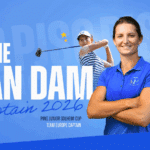
Related: “It’s one of the proudest moments of my life” Anne Van Dam is European Captain for the 2026 PING Junior Solheim Cup

Simon Bale
Simon Bale is the publisher of Golf Today. A low single-figure handicap golfer, he was previously a major shareholder and course reviewer for Top100GolfCourses.com for over a decade, starting in 2010. Through this role, he developed extensive knowledge of golf course design and architecture while playing more than 300 courses worldwide.