

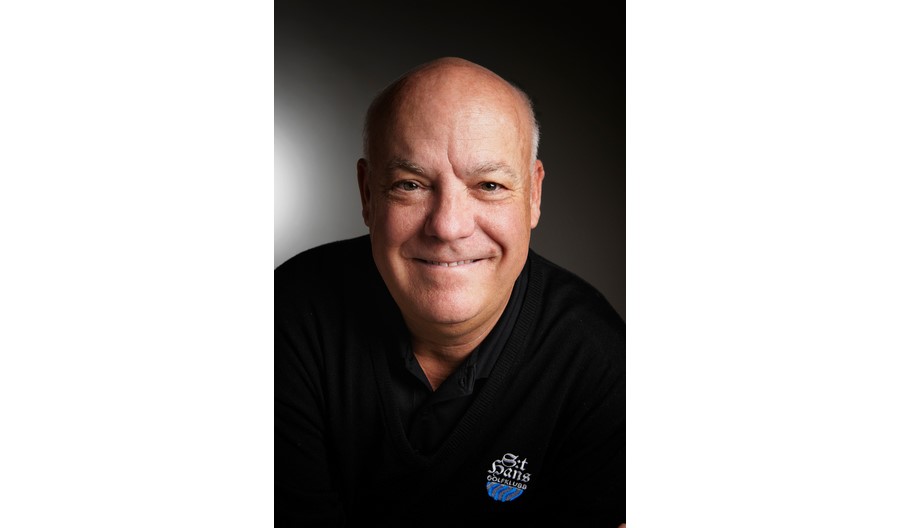
Forrest Richardson is an author, golf course architect, and leading advocate for a more sustainable future for golf. Drawing on decades of experience designing, renovating, and reimagining golf courses worldwide, Richardson has emerged as a distinctive voice on the relationship among golf, the environment, communities, and the economy.
His newest book, The Sustainable Sport: How Golf’s Five Million Acres Benefit Our World, offers a broad and sometimes provocative look at golf’s place in the world, challenging long-held perceptions of the game and the land it occupies.
That perspective has been shaped by Richardson’s career in golf course architecture and by years spent studying how golf courses interact with surrounding landscapes and communities. His work has taken him across the United States and to projects in Mexico, Central America, Canada, Europe, India, and Asian Russia.
The Richardson Story
My journey in golf design began when a neighbor pointed out that there was a profession called “Golf Course Architect.” This intrigued me at the young age of 9.
From that point forward, I used every minute of free time sketching out golf holes and planning how to convert the backyard into a home-built short course.
A few years later I got connected with Jack Snyder, a Phoenix-based ASGCA Member. Jack let me come by his office, which started a 35-year friendship that led to collaboration on numerous projects.
***
What was the genesis for the book?
Over the years it became obvious to me that a lot of us in golf know that golf is good. But we don’t always have the best talking points when we’re faced with explaining why.
When we hear that ‘golf uses too much water’ — or ‘golf is only for a certain class of people — or that ‘golf is a waste of land’ — we know the truth, but we’re not always on the same page with an answer. I wanted to try and help to put some common facts out there that we can all use, remember and use when needed.
The title — “The Sustainable Sport” — articulates that golf can certainly succeed in the 21st century. Is that more of a hope or realistic expectation that you personally believe?
First off, it’s a nearly 600-year-old sport.
So, I doubt we really must worry about it continuing to be sustainable — at least in literal terms. But, when it comes to the environment, being socially responsible and an economic force, I think golf needs to be prepared for what may come along.
Whether that’s water, land use or being even more inclusive, this is where our hearts need to go as we get prepared for future generations.

Is the message of sustainability being communicated effectively to those who play golf avidly at the recreational level?
Yes, in that all of golf’s governing bodies do their best.
The hiccup is that they all speak for themselves. The superintendents focus on what goes into maintenance. Obviously, that is their business. The owners focus on how to manage from a sustainable basis.
The USGA and R&A have their own mission statements. What I’d tried to do, is to bring it all into one place with a common voice that reinforces the three-legged stool of sustainability — social, economic and environment — all three aspects, and the positives that golf affords to each.
Many environmentalists have long viewed golf as a sport that is more of a taker than a giver. Are they wrong in having that viewpoint?
That is a wrong assumption.
Golf courses are parks. They just look different than a typical park. A golf course has many more dimensions than a typical park. Golf courses employ people, they elevate property values and provide millions with outdoor, social recreation.
They give in many more facets than most any other open space land use, which is the point of the book at every turn.

Can a meaningful and productive relationship be placed in motion or is it likely battle lines will only intensify going forward?
I think so, but I’m an optimist. The key is to explain the facts to the occasional golf naysayer. When I meet someone predisposed to dislike golf, it is often about the use of land and resources.
A great icebreaker is the question of how much lawn area in the US is taken up by golf courses? Most people hover around 10-20% as a guess. The actual percentage is less than 3%. Then, I shift to water. Of all the lawn area across the US — golf uses only 1½% of the water that takes care of that grass.
Less than 3% of all managed turf is made up of golf, but golf does a much better job of conserving water. From there, we open the door to more facts. I may not convert everyone, but at least I get a strong message across.
Water usage is a critical issue — most especially in the western States — and likely in the years ahead will only become more magnified with even greater government regulations.
Are those in the golf arena, particularly those in the development side, sufficiently aware of this dimension and able to bring to life various facilities that will not be verdant green colored landscapes?
Nature manages its grasslands with yellows, browns and greens. Golf needs to learn from nature, and we are. The golf course of the future will not be crisp and always green.
That goes against the nature. Water is a huge factor in managing any grass landscape… natural or artificial. Golf must continue to learn from nature.
Can golf survive if water restrictions are greatly tightened — say upwards of 50% –beyond what they are today?
I think so.
Virtually every water savings technology in the world of turf management, came from golf. That includes new turf varieties that use less water, nozzle technology, irrigation control systems, rootzone science — chances are, anything that saves water for a lawn, originated with golf.
There is no reason to think golf will not continue to contribute.

What specific contributions can the main golf organizations make — the USGA, R&A, PGA of America, PGA Tour, et al and what letter grade would you give collectively for the efforts they have put into motion in achieving meaningful sustainability?
An average grade is probably a “B”, but not because they aren’t trying. They are. Again, it’s just that they are not all on the same page.
One does this, the other does that.
Golf is made up of proprietary bodies. My hope is that the writing finds common ground. I celebrate all of the efforts, but I worked to make them a bit more seamless. Less boundaries.
If you could change one thing unilaterally in golf – what would it be and why?
Stop focusing on length. The length pursuit of golf holes, courses, drives and players has created a need for more land. Holes have to be wider, ranges longer, nets higher, etc. Golf is a game of how NEAR…not how FAR. We need more evangelism on this.
How will those in golf measure success, beyond dollars alone, in the area of sustainability – both short and long term?
Golf is played today by more people than ever before in history. For a 600-year-old sport, that’s impressive. One would assume that golf may have fallen out of favor, but it hasn’t. I think the fact that no two courses are the same, no two days are the same, and that it’s a sport of personalities is what has — and will — keep golf alive.
Golf will get measured in years. Its longevity will hopefully define its future. I don’t see it going anywhere.

Related: Foxhills Commits £3m to New Irrigation Across Longcross and Bernard Hunt Courses

M. James Ward
A long-time member of both the GWAA and MGWA. The 68-year-old has covered all facets in golf since 1980 — including reporting on over 100 major championships and 13 Ryder Cup matches. His writings have appeared in various outlets. On a personal level, has played over 2,000 courses globally and is lead reviewer for Top 100 Golf Courses.
Previously served for 17 years as national course rating panelist for Golf Digest. Has also personally competed in USGA Championships. Resides in the metro New York City area with his wife Celeste. Favorite quote paraphrased for golf — “You are what your golf score says you are.”