
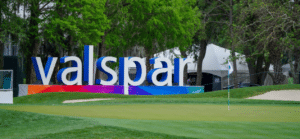
Matt Wallace was one shot outside the cut line at the Valspar Championship in March when his ball, sitting on a bed of pine straw at the par-5 11th, moved as he addressed it. Nobody else saw it. He called a one-stroke penalty on himself anyway, then birdied three of his last seven holes to make the weekend after all.
“Obviously I thought some people would see that, and nobody saw it,” he said afterwards. “You’re doing it to protect the rest of the field.”

Golf may be the only major sport that trusts its players to referee themselves, and it is one of the game’s finest traditions. It works because everyone signs up to it. Gambling works the other way round. The businesses taking the bets do not get to mark their own cards. Someone else has to, and that someone is the regulator behind the licence.
Golf’s honour system, written into the Rules
The R&A puts the principle at the very start of the Rules. Players are responsible for applying their own penalties, and Rule 1.2a asks them to act with integrity by “applying all penalties, and being honest in all aspects of play”.
The scorecard is where that honesty is put in writing, and the Rules are unforgiving about it. Sign for a higher score on a hole than you made and the higher score stands. Sign for a lower one and you are disqualified. The card is the player’s word, and the game holds them to it.
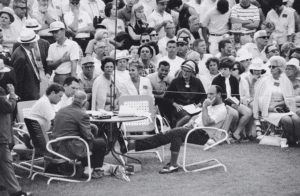
No one learned that more painfully than Roberto De Vicenzo at the 1968 Masters. His playing partner, Tommy Aaron, marked him down for a four at the 17th, where he had made a birdie three. De Vicenzo signed the card, the four stood, and Bob Goalby won the green jacket by a shot instead of facing him in a Monday play-off. “What a stupid I am,” the Argentine said. Augusta put a scoring tent behind the 18th green the following year. Golf trusts its players, but it has never relied on trust alone. There is always a marker, a recorder and a card to sign.
When even golf needs a referee
The scorecard covers what happens on the course. Betting is a different matter, and here golf does not leave things to conscience.
In August, the PGA Tour suspended PGA Tour Champions player Matt Gogel for six months under its integrity programme. He had placed what he called “small recreational wagers” on PGA Tour competition in 2024 and 2025, though never on an event he was playing in. “I would never knowingly violate the integrity of the game of golf,” he said. “I made an honest mistake.” He will be back in February 2027.
It is hardly a scandal, but it shows where the line sits. As soon as money changes hands on the outcome, golf stops relying on honour alone and brings in investigators and rules with real consequences. A golfer at home with a betting or casino account deserves that same protection on their side of the screen.
Who marks a gambling site’s card?
A casino or bookmaker cannot be left to settle its own disputes, which is the whole point of a licence. What matters is who issues it, and what they will do when something goes wrong.
In Britain, a Gambling Commission licence comes with real obligations. If a complaint has not been resolved within eight weeks, the operator must offer free, independent dispute resolution, and the decision is binding on the operator for amounts up to £10,000 if the customer accepts it. Every licensed online operator must also take part in GAMSTOP, the national self-exclusion scheme.
Other regulators draw the line in different places. Curaçao’s new gambling law, which came into force in December 2024, requires operators to offer a complaints procedure and access to an independent dispute service, but the regulator itself does not step into individual cases. If you want to see how those differences stack up, the casino curacao guide to EU casinos accepting UK players sets out how Malta, Gibraltar and Curaçao licences compare on player funds and complaints, and is candid that none of them carries UK Gambling Commission oversight.
A licence badge in a website footer is a little like a signature on a card: it only means something if it can be checked. The regulator’s public register is the place to do that, and the name and web address on the licence should match the site in front of you.
Signing for it
De Vicenzo’s mistake was trusting a number he had not checked. The same habit serves anyone with a betting account. Know who holds the licence, who you would complain to, and which protections come with it, and find out before the first deposit rather than after a dispute. UK safeguards such as GAMSTOP and free dispute resolution apply to Gambling Commission licensees, and they do not follow a player to a site licensed elsewhere.
It is also worth deciding what an evening’s entertainment may cost, and when it ends, before any game starts. That is a decision best made with a clear head, not halfway through a session.
Golf will keep relying on players like Matt Wallace to call the penalties nobody else saw, and the game is better for it. Online, nobody should have to take a site’s word for it. The best players check their card before they sign it, and the same habit is worth keeping before opening an account.

Andy Newmarch
Being one of the original owners of the ‘Top 100 Golf Courses’ website enabled Andy to travel far and wide playing and rating courses, with the numbers somewhere around 1200 courses in 40 countries. Although now away from the day-to-day grind of course ranking, having a keen eye on course developments is still high on the agenda. Currently hanging on to a handicap index of 8.1 he is probably as competitive on the course than ever but more often than not will compliment this by relaxing at the 19th hole to make up for the hard work!