

SOUTHAMPTON, NY. This week the 126th US Open will be played at the iconic Shinnecock Hills Golf Club.
The eastern Long Island club hosts its sixth championship — five played there since 1986 – the most of any club in that interval of time.
This week’s Open marks another milestone of a lesser sort on two different fronts. I have provided media coverage for all the championships played at the William Flynn design since the club was resurrected when hosting in 1986.

And this year’s event marks a personal milestone — my 40th appearance at the national championship in American golf.
My first intersection with the US Open came 59 years ago as a 10-year-old attending with my Dad in 1967. That championship was hosted by another renowned venue — Baltusrol Golf Club in Springfield, NJ.
My father was a passionate supporter of Arnold Palmer and the event marked the first major sporting event I ever attended. My memories of that time are still intact. The grounds at Baltusrol were immaculate – I had never seen grass grown to such a degree of exact consistency. And the magnificence of the regal clubhouse overlooking the property was a clear eye-opener.
My dad was one of the members of “Arnie’s Army” and while Palmer put up a good showing – eventually finishing in the runner-up position — it was Jack Nicklaus who claimed his second US Open title with a stirring four-round record total of 275 — highlighted by a closing 22-foot putt for a closing birdie at the 18th.
Four years later my Dad was intent on doing another US Open road trip – this time 90 miles away from our house in Clifton, NJ – to the Philadelphia suburban bedroom community of Ardmore, PA.
The 1971 US Open was hosted by Merion Golf Club and my Dad had taken a keen interest in an emerging player rising up the golf ranks via a far different path than many of his contemporaries. Lee Trevino came onto the golf scene four years earlier at Baltusrol when finishing in a tie for 5th. The very next year he would capture the title with an equal-tying four round total of 275 and become the first golfer to score sub-70 scores in all four rounds.
Trevino was of Mexican-American heritage and his intersection with golf came via playing courses where grass grew by accident — not by design. My father was a blue-collar person who worked with his hands and Trevino’s garrulous nature and inventive shotmaking captivated a far different audience.
Merion also proved to be an unforgettable venue. I had never seen wicker baskets at the top of flagsticks. The smallish grounds that hosted the championship also provided an intimate setting. At the culmination it was Trevino taking down Nicklaus in an 18-hole playoff. On a personal level at age 14 I had become infatuated with golf and began to immerse myself in all the assorted elements tied to the sport.
When the US Open returned to the NY / NJ metro area at Winged Foot in 1974, my interest in golf was exploding rapidly. I followed a wide swath of players and I was keen to see how the famed West Course would be set-up given the brilliant final round 63 scored by winner Johnny Miller in the final round the year prior at Oakmont.
Winged Foot was nothing short of a torture track of epic proportions. Many opined the USGA had set in motion a clear game plan to ensure that no such 63 or its equivalent would be scored again. The most notable quote of the week came from the chairperson of the championship committee — Frank “Sandy” Tatum — “We’re not trying to humiliate the best players in the world. We’re simply trying to identify them.”
I can recall vividly the expression of player’s faces when leaving the 18th after any of the rounds. It was the equivalent of stepping out of a boxing ring with a relentless Mike Tyson throwing one connecting punch after another. Hale Irwin would go on to claim the title with a seven-over-par total of 287 and become a face in professional golf for the next two decades. But the lasting impression was what a US Open course with exacting standards can do both physically and mentally.
Six years would pass before my next intersection with the US Open. That happened in 1980 when the championship returned to Baltusrol. Prior to that as a student at the University of South Carolina I was the sports editor for the college newspaper and that position introduced me to a local radio station seeking “gophers” to help with coverage of the Masters. It was quite advantageous that Columbia was just 75 miles from Augusta. The sports director at WIS-AM asked me if I could provide some on-site reports from Baltusrol. My reaction was exuberantly “yes” but I knew little on the manner and scope of actual reporting.
Fortunately, I was helped considerably by low first round scoring when both Nicklaus and Tom Weiskopf opened play with record tying 63’s. One of my lasting memories was the chant of “Jack is back” when Nicklaus sealed his record-tying fourth US Open triumph.
Since that event, I have been a regular media presence at the championship. I have only missed a scant handful because of assorted family matters, the passing of a long-time college friend, and, as a result of the global pandemic.
Shinnecock Hills, along with Oakmont and Pebble Beach, are among my top three sites for the championship. Each showcasing a unique vibe when stepping onto the grounds.

Securing Shinnecock Hills as an ongoing main venue for the national championship of American golf was a brilliant move by the USGA. When then Executive Director Frank Hannigan suggested such a move in the early 1980s, the immediate reaction was hardly overwhelmingly positive. Not so because of the pedigree of the design but the mounting logistical issues in staging the event at a club that only had seasonal members.
The reaction by players for the re-emergence in 1986 was extremely positive. Players were amazed by the array of different golf holes and how the Flynn routing plan mandated constant adjustments during the round.
Not every US Open has been memorable on a positive front. The USGA carelessly allowed turf conditions to get excessively dry and firm and during the ’04 and ’18 events, both at Shinnecock Hills. In fact, after the debacle at the ’04 event, the relationship between the club and USGA soured to the point that hosting future Opens at the club were problematic.
One of the really fun things to see is the reaction of those attending. This is particularly so when a number of years have passed since the championship has been in a given area.
I remember being at The Olympic Club in 1987 — 21 years having passed since it was played in the Bay Area. The same was true when the championship returned in 1996 to Oakland Hills in the greater Detroit area for the first time since 1961. The exuberance was front and center and clearly palpable.
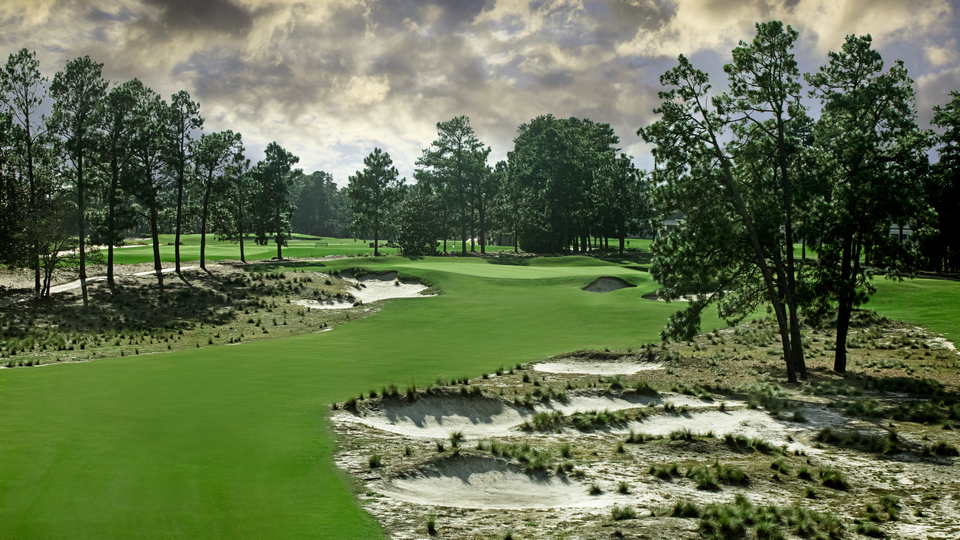
The USGA smartly opted to include another venue that has re-established itself for the ultimate shotmaking challenge it provides — Pinehurst No. 2. The 1999 event in the sand hills of North Carolina was highlighted by the putting wizardry of winner Payne Stewart. Over the final three holes during the final round Stewart secured the victory climaxing with an 18-foot putt at the closing hole and raising his arm in triumph.
The inclusion of Bethpage into the mix in 2002 was of immense personal pride since I had been playing the renowned Black Course dating back to my teenage years. Having Tiger Woods win the championship on the first truly legitimate taxpayer-owned public course was a clear game changer.
Six years later Woods would do similarly at a similar venue type in winning on the South Course at Torrey Pines in an epic duel with Rocco Mediate. The lasting memory being Woods draining a critical 12-foot putt to secure his playoff spot.
A US Open is a forever statement on one’s standing in the game. Yes, there are surprise winners from time to time. Interesting how Andy North and Lee Janzen each won twice during my coverage period but overall, only had only modest success on the PGA Tour and in other major events.
The US Open wisely ends on Father’s Day and for any guy who was introduced to the game by their Dad – like I was – it is a time to reflect back on that special relationship and what it set in motion.
My father loved the game and his passion for the sport was transferred to me. I have a had a clear ringside seat in watching at close proximity the finest players in the world as they seek to claim one of the most important titles in the sport.
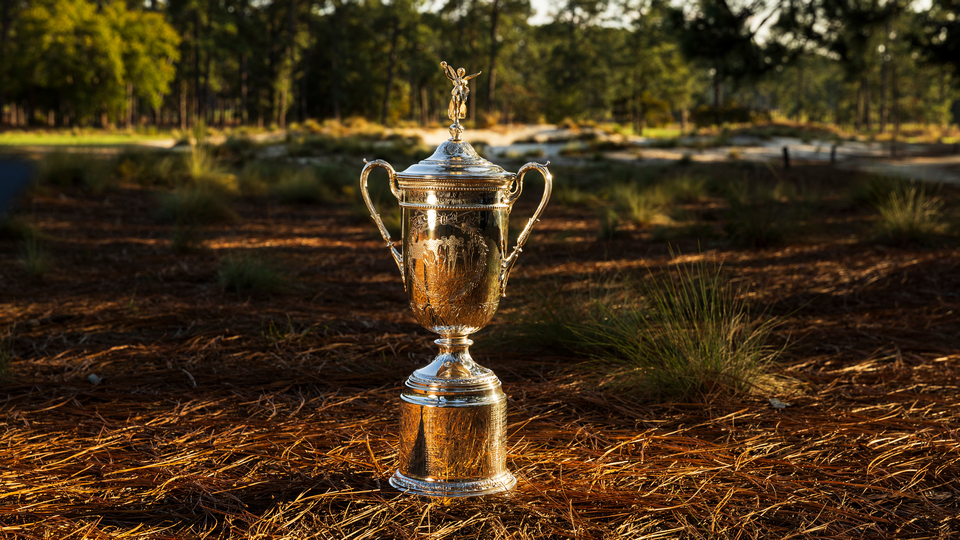
The US Open has had its ups and downs during the 37 times I have covered the championship as a media member. Even with the various fumbles, the aura and mystique of the event clearly maintains its grandeur cemented by the irrefutable success of such legendary players as Bob Jones, Ben Hogan, Jack Nicklaus and Tiger Woods.
The venue this year is among the sport’s most revered sites. Much will happen when the first players tee off Thursday until the final putts are holed on Sunday. The key central concern will be how well the USGA has prepared the course and in recognizing the clear errors in judgement made from the ’04 and ’18 Opens held there.
The curtain is about to rise for the 126th Championship.
Play away please.

Related: The Finicky Golfer – Shinnecock Hills Golf Club

M. James Ward
A long-time member of both the GWAA and MGWA. The 68-year-old has covered all facets in golf since 1980 — including reporting on over 100 major championships and 13 Ryder Cup matches. His writings have appeared in various outlets. On a personal level, has played over 2,000 courses globally and is lead reviewer for Top 100 Golf Courses.
Previously served for 17 years as national course rating panelist for Golf Digest. Has also personally competed in USGA Championships. Resides in the metro New York City area with his wife Celeste. Favorite quote paraphrased for golf — “You are what your golf score says you are.”