
FARMINGDALE, NY. My memories of Bethpage stretch back over half a century ago. My father grew up in the Bronx and my introduction to the game took place at Van Cortlandt Park. Incidentally, the New York City owned property is the oldest public course in the United States.
I had heard a great deal about Bethpage from my father and after a few years of playing I mentioned my desire at 15 years of age to go there and try my skills on the Black.
My father was hesitant. He had no issue in taking me to Bethpage but he advised that before making an attempt to play the Black I would need to demonstrate golf skills at the other layouts at the property.
Initially, I thought the approach my father recommended was not exactly a glowing endorsement of my golf skills but when I first visited Bethpage I was astounded by the size of the property – nearly 1,500 acres of land straddling Nassau and Suffolk Counties.
The seeds of the present Bethpage State Park came during the height of The Great Depression. Robert Moses, the principal visionary and administrator, oversaw the creation and development via the Bethpage Park Authority, which he led as president from 1933 to 1963. He championed the project as a means to relieve unemployment during the Great Depression, funding it through bond issuance and directing the labor-intensive construction of its golf courses and infrastructure
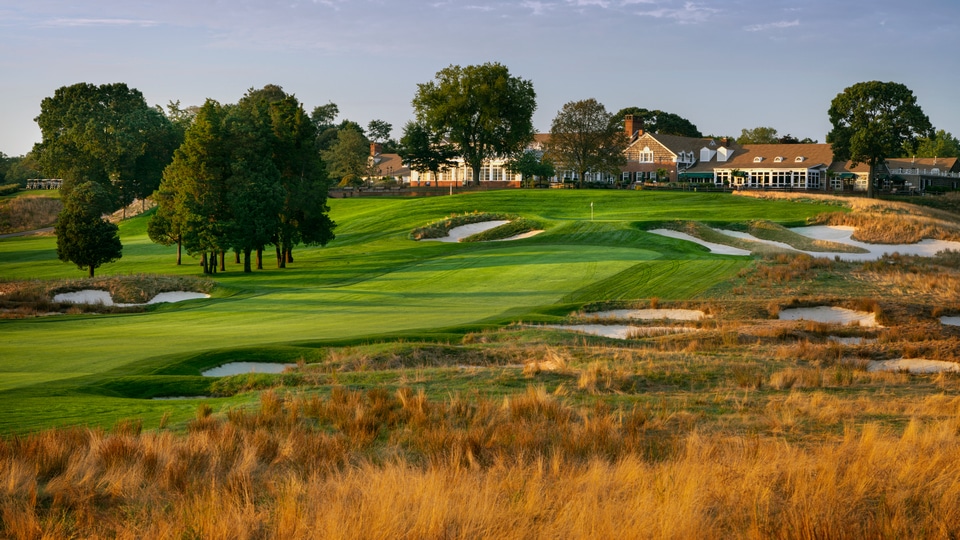
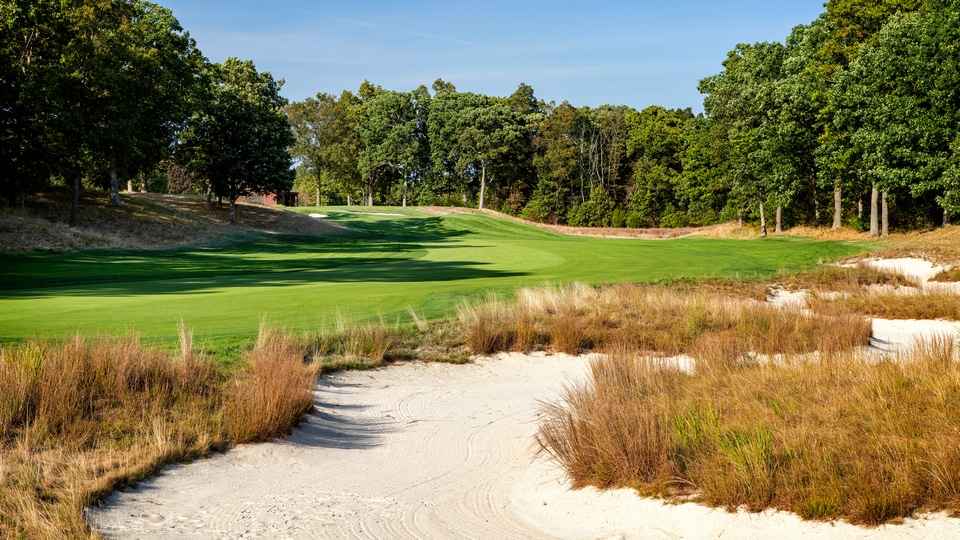
I played the Black Course for the first time during the summer of 1972 and the immediate impression was hammered home in witnessing the immense scale of the layout – especially the mammoth bunkers scattered around the design. In that same summer I actually saw a large bulldozer moving the sand into place at one of the large bunkers on the par-5 4th. Truly amazing to see firsthand.
The Black does not return to the clubhouse area after 9 holes and the physicality of walking the rolling terrain was evident. One other thing that remains true to this day — no power carts are allowed on the Black and that means players have to carry their own bag, have a trolley / pull cart or make arrangements to have a caddie take one’s bag. At the Black, you will know the physical shape you’re in when carrying your bag.
The Black is clearly an aerial course in terms of shotmaking. This happens frequently when approaching the elevated putting surfaces. Plenty of other courses I had played allowed for indifferent iron play and still able to secure a par with some deft chipping and putting. At the Black recoveries are hard fought battles – with the course usually winning many of them.
I learned early on that the Black does not permit easy short cuts or shots hit that are not carefully planned with the execution to back them up.
Turf conditions back then were, to be charitable — woeful. Teeing areas could easily have grass not sufficiently cut or rolled, and often times getting a tee into the ground required the strength of Hercules to penetrate the rock-solid ground.
Putting greens were rarely cut to a low height and even putts of less than 10-feet could require a full shoulder-turn to get the ball to the hole. Grass heights beyond the immediate fairway area could range from just a few inches to near hay-like height.

In sum – the Black Course was an engrossing layout but the turf conditions were simply horrific given the sheer potential of the design.
In the years to follow I would assemble a group of players in my age range — upwards of 8-12. We would venture to Bethpage in the very early morning hours and sit in the parking lot hours before the sun would rise. In that time frame, no tee times given out over the phone. If you wanted to play one of the courses at Bethpage, you showed up physically and waited your turn like everyone else.
The camaraderie of the people present was a true golf fest. I actually got to know several people quite well — an assortment of teachers, police and fire officers, professional people, et al.
What was interesting is that when the line started to enter the clubhouse you came upon an “L” shaped counter. In the first area you paid your greens fees. Once done you went to the far side of the counter and you would see a staff person who looked like the quintessential accountant. In front of his face large sized books which contained the various tee slots available at the 90-hole complex.
The man behind the counter had the stature of St. Peter at the pearly gates — he had the final word on what course and what time you would have.
The facilities at the Black in the pre-US Open period were bare bones. There was a practice range but the overall shape was beyond hopeless. The practice balls were so bad, physically strong players could actually throw them farther than when hit by a golf club.
Bethpage did have a functional clubhouse but the amenities were strictly bare bones. The food service could best be described as a low brow cafeteria. After securing tee times, players would march over and form another line to get some breakfast. Basic food offerings and not especially noteworthy.
The pro shop at that time was stocked with items but every space within the area was packed to the rafters.
The timing for a meaningful renaissance proved to be an asset for Bethpage. Plenty of key golf notables in the NY metro area made reference as the sheer potential for the Black Course to host key events. David Fay, then the USGA lead administrator, came to the layout and was impressed with what he saw. The USGA was looking for a suitable site to host the US Open and the need to have the event on a legitimate public course was a priority.
Conversations escalated and that caused officials from New York State to enter the picture. Leading the way was Bernadette Castro, the head of State Parks. Castro was instrumental in getting then Governor George Pataki to realize what a distinct honor it would be to have Bethpage become the first publicly owned facility to stage the national championship of American golf.
The USGA knew the Black would need an extensive overhaul and architect Rees Jones entered the picture. Jones would carry on what he had done with other classic courses that served as host to the US Open and PGA Championship. In addition, Jones smartly offered his services pro bono knowing full well that such a project would only elevate him higher in the golf world. On the turf side — the talented Craig Currier was hired to handle the turf improvement.
I had fantasized an event of the magnitude of the US Open coming to the Black Course but I tempered that with the reality that such an effort was unlikely given the commitment needed and the substantial dollars needed.

The announcement by the USGA that the 2002 US Open was coming to Bethpage both shocked and excited me. As a journalist I had been covering golf’s major championships since 1980 and, as a dedicated, public course player who had played the Black countless times over the years I was thrilled to see how the best players would fare.
The win by Tiger Woods in 2002 was nothing short of electric. The game’s premier player won the event by being the only player to finish under-par for the 72 holes. The excitement from those in the gallery was palpable in having the championship played on a layout open to all.
The US Open returned in 2009 and even though poor weather plagued that event — just as it had in 2002 — the excitement in seeing the championship return so soon was a clear validation that Bethpage had become a global household name in the sport.
When the USGA opted not to return to Bethpage, the move by the PGA of America and the PGA Tour to stage events there was a clear sign that the facility would remain on the front page of key host venues.
The PGA Tour came in 2012 and 2016 with Nick Watney and Patrick Reed winning respectively. Three years later the third major came with the PGA Championship and Brooks Koepka won after opening with record rounds of 63-65.
This year’s Ryder Cup matches are the latest chapter in how a club, where grass years ago grew by accident rather than by design, is again at the pinnacle of the sport.

The future beyond this week looks no less promising. The PGA of America announced the Women’s PGA Championship will come in 2028 and the PGA Championship will make its second appearance in 2033.
Watching the multitude of people at this year’s Ryder Cup matches has been a true thrill. Words are inadequate to truly capture the emotions.
My father never saw any of the grand events at Bethpage. He passed in 1984 but I know he had a profound respect for the ultimate challenge the course provides and he saluted me when I finished second in the US Public Links Championship qualifier held there that same year.
The New York metro area is blessed with a deep array of golf clubs — likely the finest in the United States. However, nearly all are private — some exclusively so. Bethpage provides an opportunity for all to test themselves on an array of courses with the Black in the lead position.
I look back at my times at Bethpage and I smile at all the moments provided.
Yesterday, today and tomorrow.
The Bethpage story remains ever alive and well.


M. James Ward
A long-time member of both the GWAA and MGWA. The 68-year-old has covered all facets in golf since 1980 — including reporting on over 100 major championships and 13 Ryder Cup matches. His writings have appeared in various outlets. On a personal level, has played over 2,000 courses globally and is lead reviewer for Top 100 Golf Courses.
Previously served for 17 years as national course rating panelist for Golf Digest. Has also personally competed in USGA Championships. Resides in the metro New York City area with his wife Celeste. Favorite quote paraphrased for golf — “You are what your golf score says you are.”