
The average golfer has more than £150 worth of used golf clubs sitting in the garage, the spare room or under the stairs at home.
Chances are you are one of them. Maybe it’s the driver you swapped out two seasons ago, or the irons that went up in the loft when you got a new set. Or the putter that went cold, so it got demoted to the back of the cupboard. It’s still there because selling it feels like a faff, and you’re not convinced it’s worth the effort.
It probably is. New clubs aren’t getting any cheaper, and that old kit could knock a decent amount off your next upgrade. Golf’s popularity has also pushed up demand for second hand golf clubs, so what’s sitting at home is likely worth more than you think.
What are your old clubs actually worth?
More than most people expect. Clubs from the big brands hold their value well, especially the major brands: Ping, Callaway, Taylormade, Titleist.
“People are often surprised when they get a quote,” says Harry, founder of used golf club specialist Nearly New Golf Clubs. “Someone will dig out a seven-year-old set of Ping irons they haven’t touched in a year and find out it’s worth £250 to £300. That’s a big chunk off a new set.”
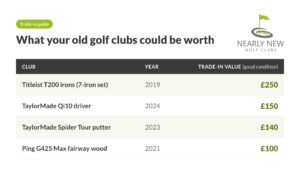
Here’s what a few popular models are worth as a trade-in, in good condition:
How trade-in works
Selling clubs privately sounds simple until you actually do it. You’ve got to work out what they’re worth, take photos, write a listing, and then deal with messages from people asking for your “best price”. When something does finally sell, you still have to find a box and get it to the post office. No wonder so many clubs end up straight back in the garage.
Trade-in takes most of that away:
- Get a quote. Enter your clubs online and get an instant valuation. The price is based on real market data, so there’s no guesswork and no waiting for offers.
- Send them in or drop them off. Nearly New Golf Clubs provides a free prepaid postage label, so you can drop your clubs off at your local post office when it suits you.
- Get paid. Take the money as cash, or as credit towards your next clubs.
Cash or credit?
If you’re buying something new anyway, credit usually works out better. A lot of trade-in schemes give you extra if you take credit instead of cash.
At Nearly New Golf Clubs you can do it all in one go, without leaving the product page. Every club on the site has a “Trade in your old clubs” button next to Add to Basket. Pop in your old club’s brand, model, shaft and condition, and you’ll get a price in seconds. If you’re having a proper clear-out, you can add several clubs.
Then you buy your new club as normal and post your old ones off with the free label they’ve emailed you. Once the clubs have arrived and been checked, the trade-in value comes straight back off your purchase.
“You know exactly what the upgrade is going to cost you before you buy,” says Harry. “You’re not selling first and buying later. It’s all done at once.”
How to get the most for your clubs
How you treat your clubs makes a real difference when it comes to trading them in. A club that’s been knocked about is worth less than half of one that’s been looked after.
A TaylorMade Qi10 driver in good condition is worth around £150 as a trade-in. Covered in sky marks, with a worn face and tired grips, it’s closer to £70. That’s £80 less for the same club, just from wear and tear.
The good news is that most of the damage is easy to avoid.
Use your headcovers. Woods and putters bash into each other in the bag, which leaves chatter marks and chips on the crown. That’s what you look at from the tee, and it’s the first thing anyone checks.
Clean your clubs after a round: Dirt left in the grooves wears the face down over time. A quick wipe and a scrub of the grooves keeps them looking better for longer.
Store them in a temperature-stable spot: Clubs don’t like extremes. A hot car boot can soften grips and weaken the glue holding the head on. A damp, freezing shed is a fast track to rust. If you can, store them in a cool, dry spot indoors, like a cupboard or a spare room.
Trade in sooner rather than later: Clubs don’t get more valuable sitting in the garage. Every year they lose a bit more, until eventually they’re worth next to nothing. A driver from the last couple of seasons will fetch good money now. Leave it long enough and it’ll end up like that old Callaway Big Bertha in the loft, worth about the price of a round of drinks. If you’re not using it, trade it in while it’s still worth something.
Where do your old clubs go?
Every club that’s traded in is checked, graded and, where needed, refurbished before being sold on as second hand golf clubs. They often end up with beginners and improving golfers, giving good clubs a second life instead of leaving them in a garage.
It works the other way too. If you’re upgrading on a budget, your trade-in credit can go towards quality used clubs instead of new. Many used drivers are only a season or two old, with almost the same technology as the latest models, and used putters from leading brands can cost a fraction of their original price.
“Some golfers trade in an old driver and walk away with a newer used model for very little extra,” says Harry. “It’s one of the cheapest ways to upgrade.”
Time for a clear-out

Those clubs in the garage aren’t doing anything for your game. Trading them in takes a few minutes, puts real money towards your next upgrade, and gives your old clubs to someone who’ll use them.
Before you buy your next driver, find out what your old one is worth. You might be surprised.

Andy Newmarch
Being one of the original owners of the ‘Top 100 Golf Courses’ website enabled Andy to travel far and wide playing and rating courses, with the numbers somewhere around 1200 courses in 40 countries. Although now away from the day-to-day grind of course ranking, having a keen eye on course developments is still high on the agenda. Currently hanging on to a handicap index of 8.1 he is probably as competitive on the course than ever but more often than not will compliment this by relaxing at the 19th hole to make up for the hard work!